
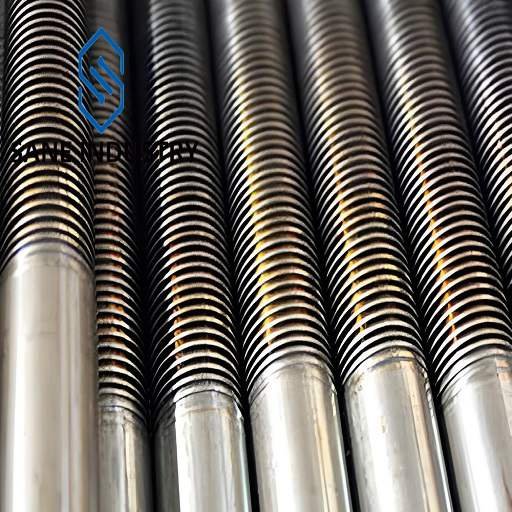
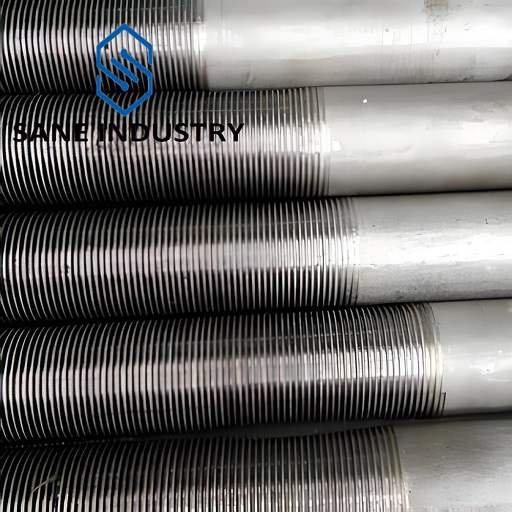
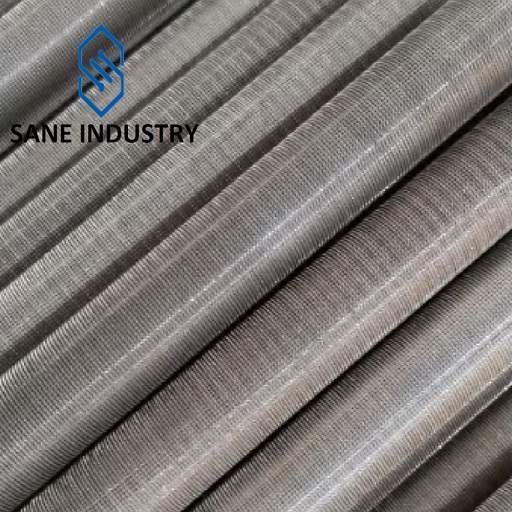
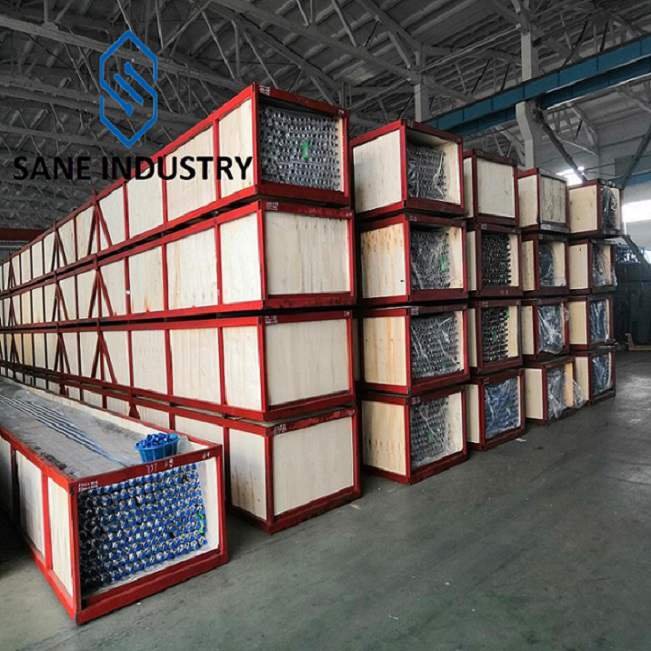
Why Choose Low Finned Tubes for High-Efficiency Heat Exchange?
Unmatched Heat Transfer Efficiency
Low fin tubes increase the external heat transfer surface by up to 10 times compared to smooth tubes, dramatically boosting condensation and convective heat transfer coefficients—studies show enhancements of up to 5.8× in refrigerant condensation applications.Optimized Fin Density for Maximum Performance
Engineered with an optimum fin density of 42 fins per inch (fpi), these low fin tubes deliver peak heat transfer performance while minimizing pressure drop—critical for energy-efficient operation in chillers and condensers.Compact Design, Reduced Footprint
Low fin tube heat exchangers achieve the same thermal output in up to 60% less space than traditional smooth tube heat exchangers, enabling smaller, lighter, and more cost-effective system designs, ideal for space-constrained industrial and marine installations.Superior Energy & Cost Savings
By enhancing heat transfer at lower temperature differentials, low fin tubes reduce compressor workload and energy consumption by 15–30%, directly lowering operational costs and carbon footprint across HVAC, LNG, and chemical processing systems.Enhanced Reliability in Demanding Environments
Constructed from corrosion-resistant alloys (e.g., copper-nickel, stainless steel) and integrated via seamless rolling or extrusion, these low fin tubes withstand high-pressure media, thermal cycling, and fouling—making them ideal for long-term use in refrigeration, power generation, and waste heat recovery.- Proven in Global Industrial Applications
Widely adopted by leading OEMs in LNG liquefaction, marine propulsion systems, and chemical process cooling, low finned tubes are the industry-standard solution where efficiency, durability, and compactness are non-negotiable.
Technical Data Sheet of Our Integral Low Finned Tubes
| Base Tube Diameter | 8 to 32 mm | 3/8″ to 1″ NPS |
| Base Tube Wall Thickness | 0.8 to 3 mm | 0.03″ to 0.12″ |
| Base Tube Length | ≤32,000 mm | ≤92 ft |
| Base Tube Material | Carbon Steel (ASTM A106B, EN 10216-2 P235GH, ASTM A179, ASTM A210, ASTM A192, etc.) Alloy Steel (ASTM A335 or ASTM A213 P5, T5, P9, T9, T11, T22, etc.) Stainless Steel (ASTM A213 or ASTM A312 TP304, TP316, TP347, B407 800H/HT, etc.) aluminum, copper, titanium | |
| Fin Pitch | 629 to 1653 FPM | 16 to 42 FPI |
| Fin Height | 0.2 to 1.5 mm | 0.008″ to 0.06″ |
| Fin Thickness | 0.27 to 1 mm | 0.01″ to 0.04″ |
| Fin Material | Same as base tube | |
| Fin Type | Integral low fins | |
For other customized requirements for low fin tubes, please contact us via allen@sanesteel.com.
Where Low Finned Tubes Are Industrially Applied?
LNG Liquefaction & Cryogenic Processing
Integral low fin tubes are the core heat transfer element in shell-and-tube condensers used in LNG liquefaction plants. Their optimized fin geometry enhances condensation efficiency of natural gas streams at sub-zero temperatures, enabling compact, high-capacity heat exchangers. Major engineering firms like Technip and Wieland have jointly qualified dual-enhanced low finned tubes as a standard for grassroots LNG facilities.Marine Propulsion & Shipboard Cooling Systems
In marine applications, low fin tubes are integrated into main engine jacket water coolers, lube oil coolers, and seawater-cooled condensers. The capillary-driven condensate removal mechanism reduces fouling and maintains stable heat transfer coefficients under variable load conditions — critical for long-haul shipping and naval vessels.Chemical & Petrochemical Process Heat Exchangers
Widely deployed in distillation columns, reactor cooling jackets, and fractionation units, low finned tubes handle aggressive media such as hydrocarbons, chlorinated solvents, and salt brines. Their corrosion-resistant alloys (e.g., 316L stainless steel, copper-nickel) ensure durability in high-pressure, high-temperature environments common in refineries and chemical plants.Refrigeration & HVAC Industrial Chillers
In large-scale industrial chillers, low finned tubes replace smooth tubes in condenser bundles, reducing required surface area by up to 40% while maintaining equivalent heat rejection. This enables smaller, lighter, and more energy-efficient chiller designs — particularly favored in food processing, pharmaceutical cooling, and data center HVAC systems.Waste Heat Recovery (WHR) Systems
Integrated into exhaust gas heat recovery units for power plants and industrial boilers, low finned tubes capture low-grade thermal energy from flue gases. Their high surface-to-volume ratio maximizes heat extraction even at small temperature differentials, improving overall plant thermal efficiency by 8–15%.- Power Generation & Nuclear Auxiliary Cooling
Used in turbine condensers and secondary loop heat exchangers, low finned tubes improve steam condensation rates under vacuum conditions. Their structural integrity under cyclic thermal stress makes them suitable for both conventional and nuclear power plant auxiliary systems.
Certifications & Quality Control of Our Integral Low Finned Tubes
- ISO 9001:2015 Certified Manufacturing
- EN 10204 3.1/3.2 for tubes
- Material Test Reports (MTR) available per batch
- Non-Destructive Testing (NDT): VT, UT, PT, RT, MT
- Third-party inspection by SGS, Bureau Veritas, TUV
- 12-month warranty on quality
Low Finned Tubes vs. Other Finned Tube Types
| Feature | Integral Low Finned Tubes | Integral High Finned Tubes | Serrated Finned Tubes | H-Type Finned Tubes | Helical Finned Tubes |
| Fin Height | 0.2–1.5 mm | 3–15 mm | 8–35 mm (interrupted) | 15–45 mm (H-shaped fins) | 8–35 mm (spiral wrap) |
| Heat Transfer Efficiency | ★★★☆☆ (optimized for high velocity) | ★★★★☆ (higher surface area) | ★★★★★ (enhanced turbulence) | ★★★★★ (dual-flow path) | ★★★★☆ (swirl-induced mixing) |
| Pressure Drop | ★★★★★ (lowest) | ★★☆☆☆ (high) | ★★★☆☆ (moderate) | ★★★☆☆ (moderate) | ★★★☆☆ (moderate) |
| Fouling Resistance | ★★★★☆ (high, smooth surface) | ★★☆☆☆ (low, prone to clogging) | ★★★☆☆ (moderate, self-cleaning serrations) | ★★★☆☆ (moderate, easy access for cleaning) | ★★★☆☆ (moderate, traps debris in spirals) |
| Ideal Fluids | High-velocity gases, steam condensate | Low-velocity liquids, viscous fluids | Corrosive or particulate-laden streams | Steam, refrigerants, dual-phase flows | Condensers, LNG systems, cryogenic applications |
| Typical Applications | Air-cooled condensers, compact chillers, HVAC evaporators | Power plant boilers, petrochemical reboilers | Chemical processing, waste heat recovery | Shell-and-tube heat exchangers (TEMA Class AES) | LNG liquefaction, cryogenic heat exchangers |
| Manufacturing Cost | ★★★★☆ (low) | ★★★☆☆ (medium) | ★★★☆☆ (medium) | ★★★☆☆ (medium) | ★★★☆☆ (medium) |
| Best For | Space-constrained systems, energy-efficient designs | Maximum heat flux under low flow | High-fouling environments | High-pressure, high-temperature service | Low-temperature phase change systems |
The Key Features of Integral Low Finned Tubes
Structure:
- Base Tubes: Low finned tubes can be manufactured from various materials including carbon steel, stainless steel, copper, aluminum, and alloys, depending on the application requirements.
- Low Fins: As the name suggests, low fins have a relatively short height compared to other fin types. This low fins profile (typically under 1.5mm) provides an optimal balance between surface area increase and fluid flow characteristics.
Fin Attachment Method:
- The low fins are formed as an integral part of the base tube through cold-rolling, eliminating the thermal interface resistance found in separately attached fin designs. This results in heat transfer coefficients that are 20-30% higher than conventional smooth tubes.
Why Choose Us
- a 16-year low fin tube manufacturer in this industry. We are experts.
- solutions for all your low fin tube needs
- the highest product quality, 12-month warranty
- the low lead times
- excellent customer service


