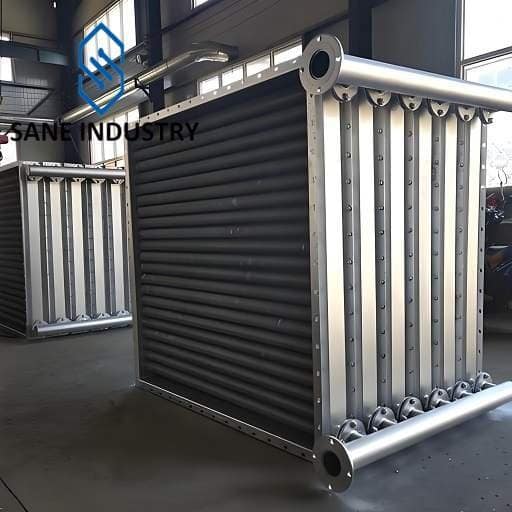
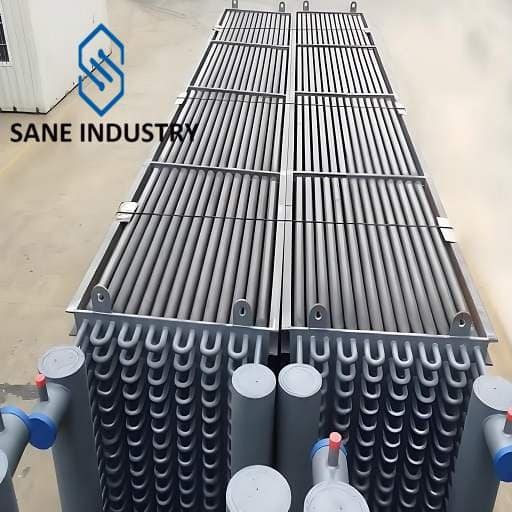
Fin tube radiators, as indispensable heat exchange equipment in modern industrial and civilian fields, play a crucial role in multiple industries including energy, chemical engineering, power, and construction due to their efficient heat transfer performance and wide applicability. This article provides a detailed explanation of fin tube radiators’ definition, structural characteristics, working principles, classification, manufacturing process, application fields, advantages and disadvantages.
What is a Fin Tube Radiator?
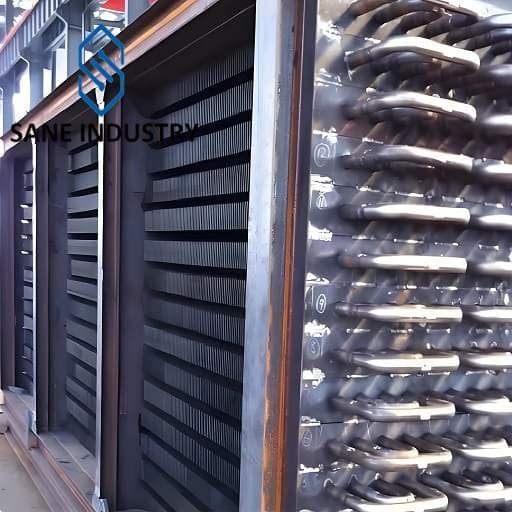
Fin tube radiators are heat exchange devices that enhance heat transfer efficiency by increasing the heat dissipation surface area, widely used in scenarios involving heat exchange between gases and liquids. Their core design involves attaching fins to ordinary base tubes, significantly improving heat dissipation performance by expanding the heat transfer area. Based on different base tube materials, fin tube radiators can be categorized into various types such as steel tubes, stainless steel tubes, and copper tubes. Among them, steel-aluminum composite finned tubes combine the pressure resistance of steel tubes with the high thermal conductivity of aluminum, with contact thermal resistance approaching zero under 210°C working conditions, making them the mainstream type today.
These fin tube radiators may be used singly or in multiples, with primary applications as heaters or coolers in various industrial processes. The finned design significantly increases the surface area available for heat transfer, making fin tube radiators more efficient than plain tube radiators.
Structural Components of Fin Tube Radiators
Fin tube radiators comprise several key components:
- Base Tube
As the core pressure-bearing component, the base tube is typically made of metal materials such as steel tubes, stainless steel tubes, or copper tubes. The base tube internally circulates heat medium (such as water or steam), responsible for transferring heat from the heat source to the heat dissipation surface. Different base tube materials have distinct characteristics:
- Carbon steel tubes: Low cost, high strength, suitable for general working conditions
- Stainless steel tubes: Strong corrosion resistance, suitable for corrosive environments like chemical plants
- Copper tubes: Excellent thermal conductivity, suitable for precision cooling applications
- Fins
Fins are key components that increase the heat dissipation area, usually made of metals with good thermal conductivity such as aluminum, copper, or stainless steel. Fins are tightly bonded to the base tube through welding, expansion, or brazing, forming efficient heat transfer channels. Fin designs come in various forms:
- Helical fins: arranged spirally and tightly, significantly increasing the heat dissipation area
- Straight fins: simple structure, suitable for natural convection scenarios
- Corrugated fins: enhance air disturbance, improve heat exchange efficiency
- Serrated fins: edges are serrated, further enhancing heat transfer effects
- Manifold Tubes
These connect multiple finned tubes together to form a complete radiator system.
- Headers
These are the inlet and outlet chambers that distribute the fluid to the tubes.
- Casing
A protective outer shell that houses the entire assembly.
Working Principle of Fin Tube Radiators
The operation of a fin tube radiator involves three main processes:
- Heat Generation: A hot fluid (such as engine coolant or process fluid) flows through the base tubes, transferring heat to the tube walls.
- Heat Conduction: Heat moves through the tube walls to the attached fins due to the temperature difference between the hot fluid and cooler ambient air.
- Heat Dissipation: The large surface area of the fins allows for efficient transfer of heat to the surrounding air, which is often assisted by natural convection or forced airflow from fans.
The efficiency of this process depends on several factors:
- Surface area of the fins
- Thermal conductivity of the materials
- Temperature difference between fluids
- Flow rates of both fluids
- Air velocity over the fins
Types and Classification of Fin Tube Radiators
Fin tube radiators can be categorized into various types based on different classification criteria. Here are the main classification methods:
- By Material
- Stainless steel finned tube radiators (304/316L/321): Suitable for highly corrosive, high-hygiene, and high-temperature scenarios, such as heat exchange with acidic and alkaline media in chemical plants (316L material), clean steam heating in food factories (304 material), and waste heat recovery from high-temperature flue gases in power stations (321 material)
- Carbon steel finned tube radiators: After hot-dip galvanizing or anti-corrosion spraying treatment, suitable for ordinary dry environments (such as mechanical processing workshops), with costs only one-third of stainless steel finned tubes
- Steel-aluminum composite finned tube radiators: Combining the pressure resistance of carbon steel base tubes with the high thermal conductivity of aluminum fins (thermal conductivity coefficient 237W/(m・K)), with heat exchange efficiency 40% higher than pure carbon steel finned tubes
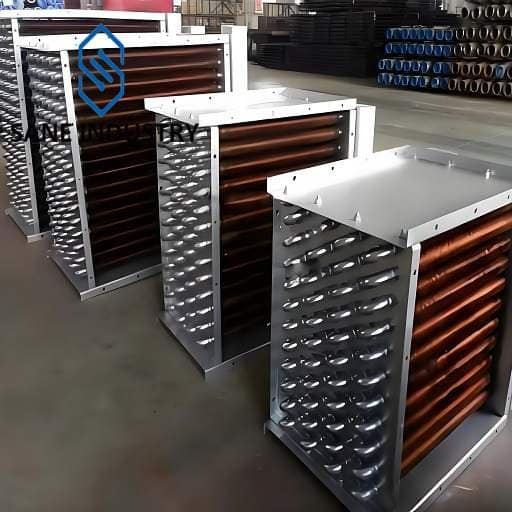
- Copper-aluminum composite finned tube radiators: Copper base tubes ensure thermal efficiency while aluminum fins reduce costs, widely used in electronic equipment heat dissipation fields
- By Process
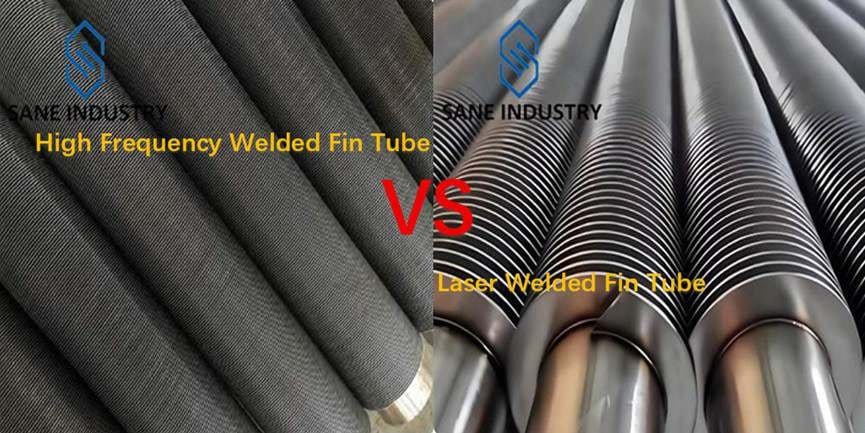
- High-frequency welded finned tube radiators: Through the alternating magnetic field generated by 200-500kHz high-frequency current, the contact between the base tube and fins instantly melts, forming gap-free welds with high bonding strength (peeling force ≥120N/cm) and excellent heat transfer efficiency (thermal resistance ≤0.0005m²・K/W)
- Brazed industrial finned tube radiators: Using low-temperature brazing materials (copper-based, nickel-based) to bond fins to base tubes, with small heat-affected zones, suitable for sensitive materials such as stainless steel and copper
- Cold-wound finned tube radiators: Achieving tight bonding between fins and base tubes without high-temperature heating, effectively avoiding performance damage to materials caused by thermal processing
- By Fin Shape
- Helical finned tube radiators: Fins are arranged spirally and tightly around the base tube, greatly increasing the heat dissipation area
- Straight finned tube radiators: Fins are mostly straight with 5-10mm spacing, suitable for low-speed natural convection scenarios
- Corrugated finned tubes radiators: Fins feature corrugated designs that can enhance air disturbance and improve heat exchange efficiency
- Serrated finned tube radiators: Fin edges are serrated, further enhancing heat transfer effects
Manufacturing Process of Fin Tube Radiators
- Material Selection
Fin tube radiators utilize various material combinations based on application needs:
| Material Type | Base Tube | Fins | Best For | Temperature Range |
| Copper | High conductivity | Good corrosion resistance | HVAC systems | -50°C to 200°C |
| Aluminum | Lightweight | Cost-effective | Automotive | -30°C to 150°C |
| Carbon Steel | High strength | Economical | Industrial | -20°C to 400°C |
| Stainless Steel | Corrosion-resistant | Durable | Chemical plants | -50°C to 500°C |
| Titanium | Excellent corrosion | High strength | Marine/Offshore | -50°C to 300°C |
- Manufacturing Techniques
The production of fin tube radiators involves several specialized processes:
- Extrusion: For aluminum fin tubes where fins are integral with the tube
- Cold Rolling: Creates fins from aluminum muff tubes with zero clearance connection
- High-Frequency Welding: Joins fins to base tubes without filler material
- Brazing: Used for copper-aluminum combinations
- L-Embedded: Fins inserted into grooves in the tube
These manufacturing methods ensure strong thermal contact between fins and tubes while maintaining structural integrity under operational stresses.
Applications of Fin Tube Radiators
Fin tube radiators are used in numerous industries and applications:
- Automotive: Engine cooling systems in vehicles.
- Industrial Process Cooling: For cooling or heating process fluids in chemical plants.
- HVAC Systems: Air handling units and heat recovery systems.
- Power Generation: Cooling systems for power plants and transformers.
- Electronics Cooling: Heat dissipation for high-power electronic components.
- Food Processing: Drying and heating applications in food production.
- Marine: Engine cooling systems in ships and boats.
- Aerospace: Environmental control systems in aircraft.
- Petrochemical Industry: In oil refineries and chemical plants, finned tube radiators are widely used in reboilers, condensers, and reactor temperature control systems.
Advantages of Fin Tube Radiators
Fin tube radiators offer several benefits over conventional radiators:
- High Heat Transfer Efficiency: The fins significantly increase surface area, improving heat dissipation rates by up to 31.9% compared to flat fins.
- Compact Design: They provide more heat transfer surface in a smaller volume compared to plain tube radiators.
- Lightweight: Especially when made from aluminum, they are much lighter than traditional cast iron radiators.
- Corrosion Resistance: Aluminum and stainless steel versions offer excellent corrosion protection.
- Versatility: Can be used in various configurations for different applications.
- Durability: Extruded fin designs maintain efficiency over time as fins don’t break or loosen.
Limitations of Fin Tube Radiators
Despite their advantages, fin tube radiators have some limitations:
- Higher Cost: The manufacturing process for finned tubes is more complex than for plain tubes.
- Maintenance Requirements: Fins can accumulate dirt and debris, reducing efficiency over time if not cleaned regularly.
- Fluid Purity Requirements: Small passages between fins can clog if the working fluid contains impurities.
- Material Limitations: Aluminum fins may not withstand very high temperatures (max operating temperature is typically around 300°C).
- Pressure Drop: The added surface area can create more resistance to fluid flow, increasing pumping requirements.
Maintenance and Performance Optimization
To ensure optimal performance of fin tube radiators:
- Regular Cleaning: Remove dirt and debris from fin surfaces to maintain airflow.
- Inspection: Check for corrosion, fin damage, or leaks periodically.
- Fluid Quality: Maintain proper fluid purity to prevent clogging.
- Airflow Management: Ensure adequate airflow across the fins, either through natural convection or forced ventilation.
- Performance Monitoring: Track temperature differentials and pressure drops to detect potential issues early.
Comparative Analysis with Other Radiators
| Feature | Fin Tube Radiator | Shell & Tube Heat Exchanger | Plate Heat Exchanger | Air-Cooled Heat Exchanger |
| Heat Transfer Area | High (with fins) | Moderate | Very High | Low |
| Pressure Rating | High (depends on material) | Very High | Medium | Low |
| Maintenance | Low | Medium-High | High | Low |
| Cost per Unit Area | Low | High | Very High | Medium |
| Space Efficiency | Excellent | Poor | Good | Excellent |
| Phase Change Capability | Good | Excellent | Good | Limited |
Conclusion
Fin tube radiators represent a versatile and efficient solution for diverse thermal management needs across industries. Their ability to provide high heat transfer in compact configurations with durable materials makes them indispensable in modern industrial systems. As technology advances, we can expect continued innovation in materials, manufacturing processes, and design optimization to meet evolving thermal management challenges in an increasingly energy-conscious world.
The future of fin tube radiators looks promising with growing applications in emerging technologies like electric vehicles, renewable energy systems, and advanced electronics cooling. Industry players are focusing on sustainability, with developments in recyclable materials and energy-efficient designs shaping the next generation of these critical heat transfer components.