

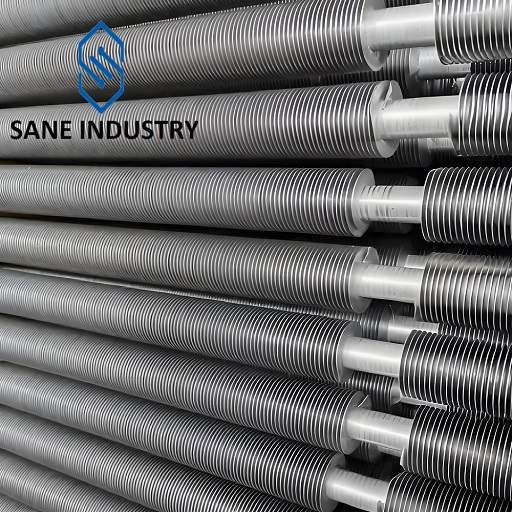
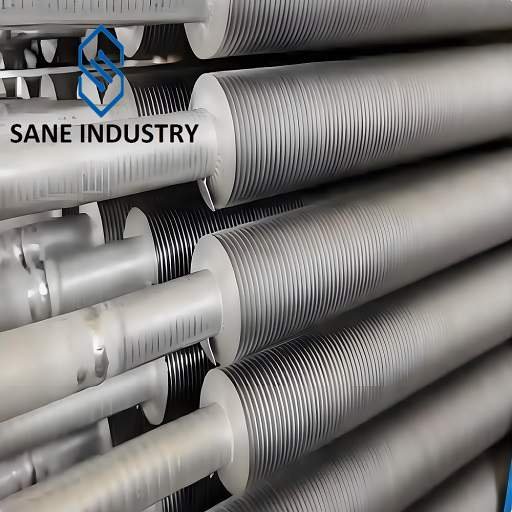
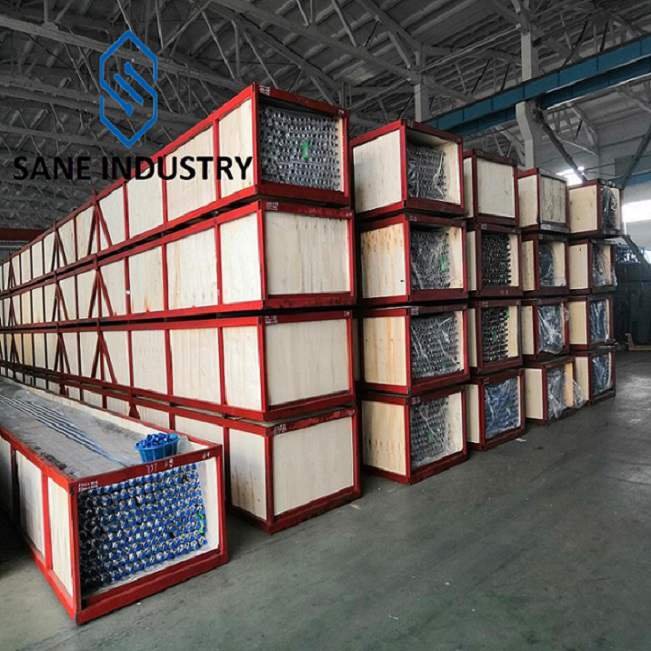
The Advantages of Laser Welded Finned Tubes (Why Laser Welded?)
Zero-Defect Laser Welding for Unbreakable Fin-to-Tube Bonding
- Unlike conventional brazing methods that introduce flux residues and weak intermetallic layers, our proprietary laser welding process fuses fins directly to the base tube with near-perfect metallurgical alignment. This creates a continuous, void-free bond with up to 30% higher thermal conductivity and eliminates the risk of delamination under thermal cycling.
Ultra-Thin, High-Density Fins for Maximum Surface Area
- Our CNC-controlled laser system enables fin thicknesses as low as 0.3mm with spacing down to 2mm, maximizing surface area without compromising airflow or increasing pressure drop. This design achieves 2.3x higher heat transfer efficiency compared to standard extruded finned tubes, reducing system size and energy consumption.
Material Flexibility Without Compromise
- Whether you need corrosion resistance (Inconel 625, 316L stainless), high-temperature stability (Incoloy 800H), or cost-effective carbon steel solutions—we laser weld any combination of dissimilar metals without warping or micro-cracking. This enables custom solutions for petrochemical, LNG, waste heat recovery, and aerospace applications.
Precision Geometry Control for Predictable Performance
- Every fin is laser welded to exacting tolerances, ensuring uniform heat distribution and eliminating hot spots. Our automated quality control system validates weld penetration depth, fin height consistency, and surface finish—guaranteeing batch-to-batch repeatability critical for industrial compliance.
Enhanced Durability Under Extreme Conditions
- Laser welding produces a narrow heat-affected zone (HAZ), preserving the base tube’s mechanical properties. This enables the tubes to withstand thermal shocks up to 800°C/min, vibration loads exceeding 15G, and aggressive media—without fin fatigue or erosion. Proven in 10,000+ hour field tests across global power plants.
Why This Matters for Your System
- Reduce energy costs by up to 30% through improved heat exchange efficiency
- Extend maintenance intervals by 2–5x compared to brazed alternatives
- Minimize downtime with failure-resistant construction
- Meet ASME, EN, and API standards with full material traceability and test reports
Technical Data Sheet of Our Laser Welded Finned Tubes
| Base Tube Diameter | 12 to 168 mm | 3/8″ to 6″ NPS |
| Base Tube Wall Thickness | 1 to 20 mm | 0.03″ to 0.8″ |
| Base Tube Length | ≤32,000 mm | ≤92 ft |
| Base Tube Material | Carbon Steel (ASTM A106B, EN 10216-2 P235GH, ASTM A179, ASTM A210, ASTM A192, etc.) Alloy Steel (ASTM A335 or ASTM A213 P5, T5, P9, T9, T11, T22, etc.) Stainless Steel (ASTM A213 or ASTM A312 TP304, TP316, TP347, B407 800H/HT, etc.) Aluminum, Copper, Titanium | |
| Fin Pitch | 39 to 512 FPM | 1 to 13 FPI |
| Fin Height | 5 to 25 mm | 0.19″ to 1″ |
| Fin Thickness | 0.3 to 1 mm | 0.01″ to 0.04″ |
| Fin Material | Carbon Steel, Stainless Steel, Aluminum, Copper, Titanium 2.25Cr-1Mo, 5Cr-0.5Mo, 11-13Cr (409, 410), 18Cr-8Ni (SS 304), 25Cr-20Ni | |
| Fin Type | Solid or Serrated | |
For other customized requirements for Laser Welded Finned Tubes, please contact us via allen@sanesteel.com.
Applications of Laser Welded Finned Tubes Across Industries
Power Generation (Gas & Steam Turbines)
Laser welded fin tubes are critical in waste heat recovery systems (WHRS) and boiler economizers. Their ability to withstand flue gas temperatures exceeding 800°C while maintaining structural integrity makes them the preferred choice for maximizing turbine efficiency and reducing fuel consumption.
Oil & Gas / Petrochemical Processing
In heat exchangers for natural gas liquefaction (LNG), hydrocracking units, and refinery distillation columns, laser welded fin tubes resist sulfuric acid corrosion and fouling. The seamless fin-to-tube bond prevents crevice corrosion — a common failure point in brazed alternatives.
Chemical & Pharmaceutical Manufacturing
For reactors and condensers requiring ultra-pure environments, laser welding eliminates flux residues and contamination risks. The smooth, continuous surface meets ASME BPE and FDA compliance standards for sanitary applications.
Aerospace & Cryogenics
Used in aircraft environmental control systems (ECS) and liquid hydrogen storage heat exchangers, laser welded fin tubes offer high strength-to-weight ratios and thermal stability at cryogenic temperatures down to -196°C.
Renewable Energy (Solar Thermal, Geothermal)
In concentrated solar power (CSP) plants, laser welded fin tubes enhance heat absorption in molten salt loops, improving thermal storage density and cycle efficiency by up to 22% compared to conventional designs.
Industry-Specific Uses
- Automotive: Laser welded fin tubes are found in fintube engine oil coolers and fintube transmission coolers for improved thermal management.
- Marine: Laser welded fin tubes are employed in fintube engine cooling systems and fintube cargo refrigeration units.
Heat Exchanger Applications
- Fintube Air Coolers: In these applications, the finned side is exposed to air while the tube side carries the process fluid. The high fin density of laser welded fin tubes maximizes air-side heat transfer, making the units more compact.
- Fintube Boilers and Fintube Economizers: Used in both water-tube and fire-tube boilers, these laser welded fin tubes enhance heat transfer from combustion gases to water/steam, improving overall efficiency.
- Fintube Refrigeration Systems: In fintube evaporators and fintube condensers, the laser welded fin tubes help achieve high heat transfer rates with minimal refrigerant charge, improving system efficiency.
- Fintube Process Heat Exchangers: Chemical and petrochemical plants use these laser welded fin tubes in various process heating and cooling applications where reliable, efficient heat transfer is critical.
Certifications & Quality Control of Our Laser Welded Finned Tubes
- ISO 9001:2015 Certified Manufacturing
- EN 10204 3.1/3.2 for tubes
- EN 10204 2.2 for fins
- Material Test Reports (MTR) available per batch
- Non-Destructive Testing (NDT): VT, UT, PT, RT, MT
- Third-party inspection by SGS, Bureau Veritas, TUV
- 12-month warranty on material and weld integrity
Basic Structure of Laser Welded Finned Tubes
Base Tube
- The cylindrical core component that provides structural integrity and serves as the primary fluid passageway. Typically made from materials like stainless steel, carbon steel, or copper alloys, the base tube’s diameter and wall thickness are carefully selected based on pressure requirements and fluid characteristics. The base tube’s smooth inner surface minimizes flow resistance while its outer surface provides the substrate for fin attachment.
Fins
- These extended surfaces are the defining feature of fin tubes, dramatically increasing the effective heat transfer area. Fins in laser welded designs are usually separate elements (unlike integral fin tubes) that are precisely attached to the base tube.
Laser-Welded Joints
- The critical interface between fins and base tube, created through high-precision laser welding.
The Manufacturing Process of Laser Welded Finned Tubes
Material Preparation
- Base Tube Selection: Stainless steel tubes, carbon steel tubes, alloy steel tubes, or copper tubes are cleaned and degreased to remove surface contaminants.
- Fin Material: Aluminum fins, copper fins, or steel fins (thickness 0.3–2.5mm) are precision-cut into required widths (5–25mm).
Welding Process
- Fin Alignment: Fins are positioned radially or spirally around the tube using automated fixtures to ensure uniform spacing (3–10 fins/cm).
- Laser Beam Parameters:
- Power: 1–6 kW (adjustable based on material thickness and welding speed).
- Speed: 0.5–3 m/min for optimal penetration depth (0.5–2mm).
- Metallurgical Bonding: A focused laser melts the fin base and tube surface simultaneously, creating a seamless, gap-free joint with minimal heat distortion.
Quality Control and Inspection
- Dimensional Verification of Fintube: Confirms fin height, pitch, and alignment meet specifications.
- Pressure Testing of Fintube: Ensures the tube can withstand required operating pressures.
- Destructive Testing of Fintube: Sample welds are sectioned and examined for penetration and microstructure.
Comparison of Laser Welded Finned Tubes With Other Finned Tubes
| Parameter | Laser Welded Fin Tube | High Frequency Welded Fin Tube | Mechanical Attached Fin Tube | Embedded Fin Tube |
| Contact Resistance | Virtually zero (metallurgical bond) | 0.05-0.1 K·m²/W | 0.1-0.3 K·m²/W | 0.02-0.05 K·m²/W |
| Heat Transfer Coefficient | 2-3× smooth tube | 1.8-2.5× smooth tube | 1.5-2.0× smooth tube | 2.0-2.8× smooth tube |
| Thermal Efficiency Improvement vs. Smooth Tube | 200-300% | 180-250% | 150-200% | 200-280% |
| Weld Strength | Metallurgical bond (200+ MPa) | Solid-state weld (150-180 MPa) | Mechanical interlock (50-100 MPa) | Diffusion bond (100-150 MPa) |
| Fin Detachment Risk | Extremely low | Low | Moderate to high | Low |
| Operating Temperature Limit | Up to 600°C (SS) | Up to 500°C | Up to 300°C | Up to 550°C |
| Vibration Resistance | Excellent | Good | Fair to poor | Good |
| Pressure Rating | Maintains base tube rating | Slightly reduced | Significantly reduced | Maintains base tube rating |
Why Choose Us?
- a 16-year laser welded fin tube manufacturer. We are experts.
- solutions for all your fin tube needs
- the highest product quality, 12-month warranty
- the low lead times
- excellent customer service


