


What is a Pipe Tee and Cross
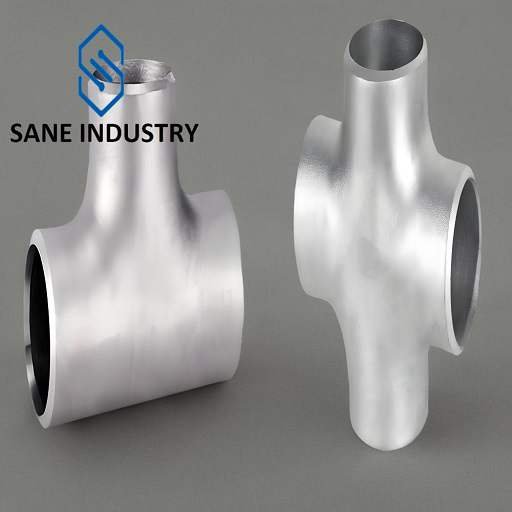
A pipe tee fitting(also known as 3-way pipe tee connector) has a T-shaped structure with three openings: one inlet, one outlet, and a branch at a 90° angle. It allows fluid flow to split into two directions or merge from two sources.
A pipe cross fitting is very similar to tee fittings, but they have a fourth branch, allowing the distribution of flow in four different directions. They provide flexibility and versatility, especially in dense and complex plumbing systems.
Pipe Tee Types
- Based on Branch Configuration
-
Straight Tee (Equal Tee)
Features three openings of identical diameter, designed for 90° branch connections in uniform pipeline systems. Commonly manufactured to ASME B16.9 standards. -
Reducing Tee
Connects pipes of different diameters:- Branch Reducing Tee: Branch outlet is smaller than the main run.
- Run Reducing Tee: One main run is reduced in size.
- Bullhead Tee: Both runs are reduced while the branch remains full-sized.
-
Lateral Tee
Incorporates a 45° angled branch (instead of 90°) for directional changes in specialized systems, such as slurry transport or low-pressure applications.
-
- Based on Connection Method
-
Butt-Weld Tee
Permanently welded to pipelines for high-pressure/temperature systems. Preferred in petrochemical and power plants. -
Socket-Weld Tee
Uses socket-style ends for compact installations in small-bore piping (typically ≤ DN50). Requires fillet welding for secure joints. -
Threaded Tee
Features male/female threads (e.g., NPT, BSPT) for low-pressure utility lines. Common in water supply and HVAC systems. -
Flanged Tee
Integrates flanged ends (e.g., weld neck, slip-on) for easy assembly/disassembly in large-diameter pipelines.
-
- Based on Material
- Carbon Steel Pipe Tee
- Stainless Steel Pipe Tee
- Copper/Brass Pipe Tee
What are the advantages of Pipe Tees
-
Versatile Flow Control
Enables efficient splitting, merging, or redirecting fluid/gas flow in pipelines without additional fittings. -
Compact Design
Occupies minimal space compared to multi-fitting assemblies, ideal for tight layouts. -
Adaptability
Available in equal, reducing, or angled (45°/90°) configurations to suit diverse system needs. -
Material Flexibility
Compatible with metals (steel, titanium), plastics (PVC), and alloys for corrosion resistance, high pressure, or hygiene-critical applications. -
Simplified Maintenance
Flanged or threaded tees allow easy disassembly for cleaning, inspection, or system modifications. -
Cost-Effectiveness
Reduces installation time and labor costs by minimizing joint connections in complex piping networks.
What are the disadvantages of Pipe Tees
-
Flow Disruption
Sharp-angle designs (e.g., 90° tees) create turbulence, increasing pressure drop and reducing system efficiency. -
Stress Concentration
Joints are prone to stress accumulation, raising risks of cracks or leaks under cyclic loading or thermal expansion. -
Maintenance Complexity
Welded tees require cutting for removal, complicating repairs or modifications in rigid systems. -
Material/Corrosion Risks
Stagnant zones in branch connections may trap debris or accelerate corrosion, especially in low-flow systems. -
Space Constraints
Multi-directional tees may demand additional supports or spacing adjustments in compact layouts. -
Cost Variability
Custom or high-performance materials (e.g., corrosion-resistant alloys) significantly raise project expenses.
How are Pipe Tees made
-
Material Selection
Metals like carbon steel, stainless steel, or alloys (e.g., Inconel) are chosen based on application requirements (pressure, temperature, corrosion resistance). -
Manufacturing Methods
A. Forging
- Heating: Billets are heated to a malleable temperature.
- Forming: High-pressure dies shape the heated metal into a tee with uniform wall thickness.
- Trimming: Excess material is removed to refine the tee’s shape.
B. Extrusion
- Used for seamless tees: Metal is forced through a die to create a hollow tee profile.
C. Fabrication (Welded Tees)
- Cutting: A section of pipe is cut, and a branch opening is created via machining or flame cutting.
- Welding: A pre-formed branch pipe is welded to the main pipe using TIG, MIG, or orbital welding.
-
Machining & Finishing
- Precision Machining: Threads, grooves, or beveled edges are added for compatibility with flanges or sockets.
- Surface Treatment: Polishing, sandblasting, or coatings (e.g., galvanizing, epoxy) enhance durability and corrosion resistance.
-
Heat Treatment
Stress-relieving or annealing processes eliminate internal stresses from forging or welding. -
Quality Assurance
- Testing: Hydrostatic pressure tests, X-ray inspections, or ultrasonic checks ensure integrity.
- Certification: Compliance with standards like ASME B16.9 (butt-weld) or ASME B16.11 (socket-weld).
What is Pipe Tee used for
-
Oil & Gas Pipelines
Direct or merge high-pressure fluid flows in drilling, refining, and transportation systems. -
Chemical Processing
Handle corrosive fluids or gases in reactors, storage tanks, and distribution networks. -
Power Plants
Connect boilers, cooling systems, and steam lines under extreme temperatures. -
Water Infrastructure
Manage water supply, sewage, or firefighting systems in municipal or industrial setups. -
Shipbuilding/Marine
Stainless steel tees resist saltwater corrosion in ballast, fuel, or hydraulic systems. -
Structural Engineering
Reinforce framework joints in bridges, industrial scaffolding, or HVAC ducts.
Our Pipe Tee Dimensions and Material
| Outside Diameter | 21.3 to 2032 mm (1/2″ to 80″ NPS) | |
| Wall Thickness | 2.11 to 60 mm (SCH10 to XXS) | |
| Type | Butt welded, socket welded, threaded, flanged | |
| Material Grade | A/SA-234 | WPB, WPC, WP1, WP11, WP12, WP22, WP5, WP9, WP91, etc. |
| A/SA-420 | WPL6, WPL9, WPL3, WPL8 | |
| A/SA-403 | WP304, WP304H, WP304L, WP310, WP316, WP316H, WP316L, WP317, WP321, WP347, etc. | |
| A/SA-815 | S31803, S32205, S32750, S32760, S32950, S39274, S32550, etc. | |
| A-860 | WPHY 42, WPHY 46, WPHY 52, WPHY 60, WPHY 65, WPHY 70 | |
For other customized requirements, please contact us.
What is the Pipe Tee Price
Please contact our sales manager Allen@sanesteel.com
Why Choose Us
- a 16-year pipe tee supplier. We are experts.
- solutions for all your needs
- the highest product quality
- the low lead times
- excellent customer service


