Bare tubes and finned tubes represent two fundamental categories of heat transfer components used across various industrial applications. While both serve the purpose of facilitating thermal exchange between fluids, they exhibit distinct structural characteristics, performance attributes, and suitability for specific applications. The choice between bare tubes and finned tubes significantly impacts equipment efficiency, space requirements, and operational costs across industries ranging from power generation to HVAC. Here is a detailed comparison between bare tubes and finned tubes covering structural, functional, and application differences, etc.
Structural Characteristics
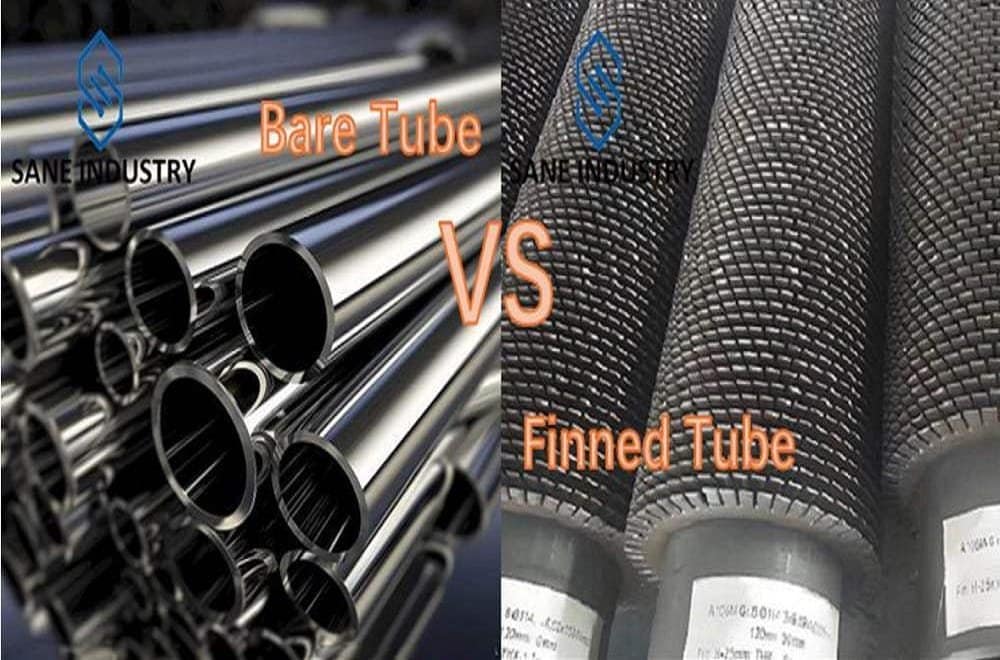
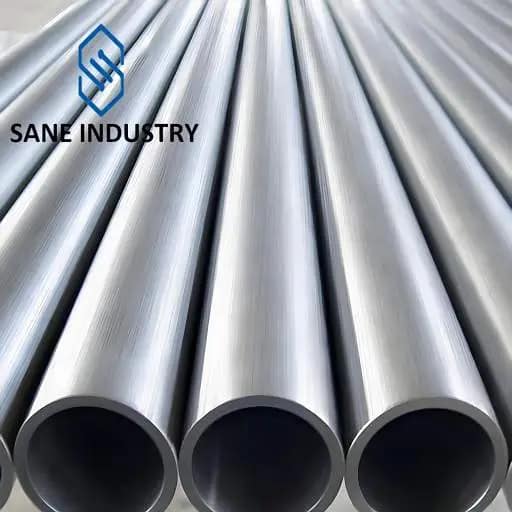
Bare tubes, also known as plain tubes, are cylindrical metallic components with smooth surfaces without any external enhancements. Their simple construction consists of:
- Homogeneous material: Typically made from metals like carbon steel tubes, stainless steel tubes, copper tubes, plastics tubes (PVC, HDPE).
- Uniform diameter: Maintains consistent cross-section along its length
- Smooth surfaces: Both inner and outer surfaces are unadorned
- Standardized dimensions: Available in various diameters and wall thicknesses
The structural simplicity of bare tubes makes them easy to manufacture and install, with minimal geometric complexity.
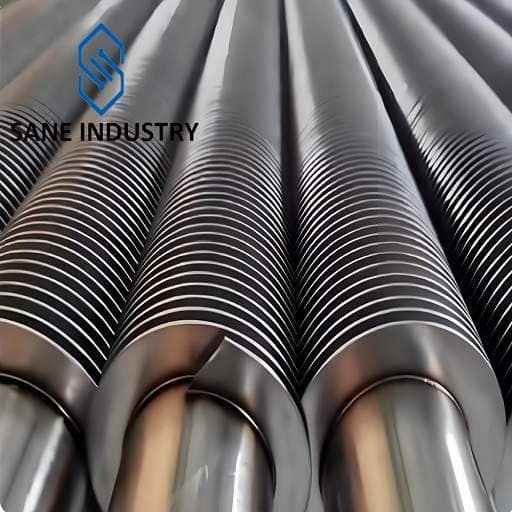
Finned tubes incorporate extended surfaces on their exterior to enhance heat transfer capabilities. Their defining features include:
- Base tube: The primary cylindrical component
- Fins: Secondary surfaces attached to the outside (or sometimes inside) of the base tube
- Fin configurations: May include helical, longitudinal, or plate-type arrangements
- Spiral fin tube: Helical wound metal strips (common in HVAC).
- Longitudinal fin tube: Straight fins parallel to the tube axis (used in oil coolers).
- Embedded fin tube: Fins mechanically bonded into grooves (high-pressure applications).
- Material combinations: Aluminum fins on copper tubes (lightweight + high conductivity), stainless steel fins for corrosion resistance
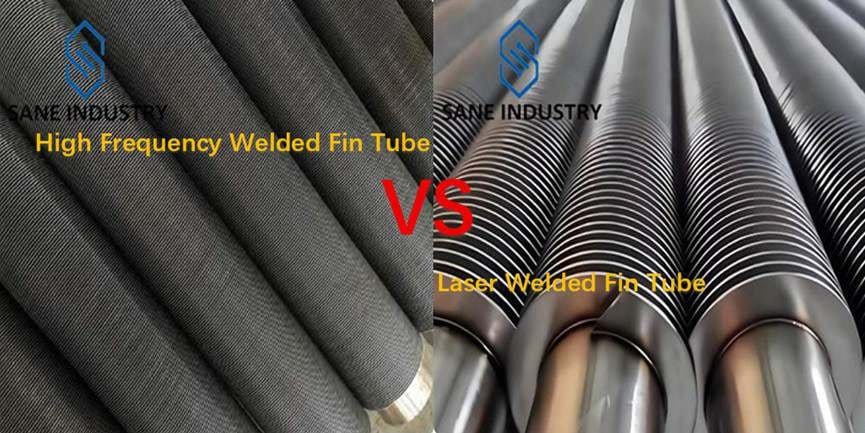
The fins can be integrally formed (extruded fin tube), mechanically attached (L-footed fin tube), or welded(High-frequency welded finned tube) to the base tube, with each method offering different performance characteristics.
Thermal Performance Comparison
Heat Transfer Mechanisms
- Bare tube: Rely solely on conduction through the tube wall and natural convection/radiation from the outer surface
- Finned tube: Utilize increased surface area to enhance convective heat transfer significantly
Quantitative Performance
- Surface area enhancement: Finned tubes can increase effective surface area by 5-15 times compared to bare tubes
- Heat transfer coefficients: Finned tubes typically achieve 2-5 times higher overall heat transfer coefficients than bare tubes in air-cooled applications
- Temperature gradients: Finned tubes maintain more uniform temperature profiles due to better heat spreading
Pressure Drop Considerations
- Bare tube: exhibit lower pressure drop due to smooth flow paths
- Finned tube: experience higher pressure drop from flow disruption around fins, requiring more pumping power
Manufacturing Processes
Bare Tube Production
Bare tubes are manufactured through several well-established processes:
- Seamless production: Piercing billets to create hollow shells
- Welded production: Forming and welding flat strips into tubes
- Drawing: Cold working to achieve precise dimensions
- Annealing: Stress relief heat treatment
Finned Tube Fabrication
Finned tube manufacturing involves more complex techniques:
- Extrusion: For integral fin designs (common with aluminum)
- Roll forming: For helical fin patterns
- Welding: For high-temperature applications
- Bonding: Using thermal interface materials
- Machining: For precision fin geometries
The choice of manufacturing method depends on the application requirements and material combinations.
Applications
Bare Tube Applications
- Boiler tubes: in power plant steam generators
- Heat exchangers: for liquid-liquid applications
- Process piping: for fluid transport
- Condensers: where fouling is a concern
- Refrigeration systems: for refrigerant flow
Bare tubes excel when:
- High heat transfer coefficients exist on both sides
- Pressure drop must be minimized
- Maintenance accessibility is limited
Finned Tube Applications
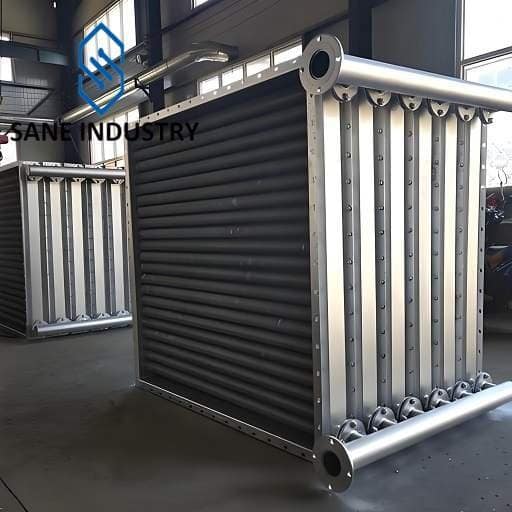
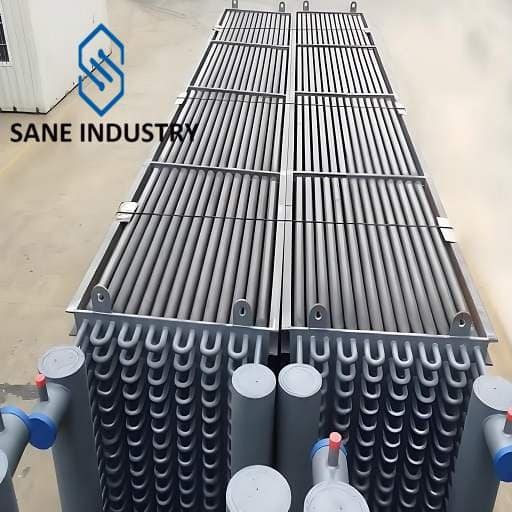
- Air-cooled heat exchangers: in refineries and power plants
- HVAC coils: for air conditioning systems
- Automotive radiators: for engine cooling
- Industrial ovens: for heating air streams
- Solar thermal collectors: for energy applications
Finned tubes are preferred when:
- One fluid has a low heat transfer coefficient (typically air)
- Space constraints require compact designs
- Enhanced thermal performance outweighs cost considerations
Performance Comparison
| Parameter | Bare Tubes | Finned Tubes |
|---|---|---|
| Heat Transfer Area | Limited to tube surface area | 4-15× larger (fin-enhanced) |
| Heat Transfer Coefficient | 25-50 W/m²K (air) | 80-300 W/m²K (air) |
| Pressure Drop | Low (<50 Pa/m) | Higher (200-800 Pa/m) |
| Fouling Resistance | Better for liquids | Prone to dust accumulation |
Manufacturing & Cost
- Bare Tube
- Generally lower cost due to simpler manufacturing
- Cost: $2–10 per meter (material-dependent).
- May require more frequent cleaning in fouling services
- Finned Tube
- 2-5 times more expensive depending on design
- Cost: $15–100 per meter (varies with fin density/material).
- Higher maintenance for finned surfaces in dirty environments
Maintenance Considerations
- Bare tubes: Easy to clean (mechanical brushing/chemical flushing).
- Finned tubes: Require compressed air/coil cleaning systems to prevent clogging.
Conclusion
Bare tubes and finned tubes represent complementary solutions in thermal engineering, each with distinct advantages. Bare tubes offer simplicity, reliability, and cost-effectiveness for applications with favorable heat transfer conditions. Finned tubes provide enhanced performance in situations requiring improved thermal exchange with low-conductivity fluids, albeit at higher complexity and cost. The selection between these alternatives should be based on a thorough evaluation of thermal requirements, operating conditions, space constraints, and economic considerations.