
Fin Tubes for Heat Exchangers
High‑Performance Finned Tubing for Industrial Thermal Applications
Heat exchangers are a crucial piece of equipment in industrial production. And the finned tubes are the indispensable core component of the heat exchanger. They can significantly enhance the heat exchange efficiency by increasing the surface area. We SANE Industry, as a manufacturer of finned tubes with over 15 years of experience, is capable of manufacturing a full range of fin tubes for heat exchangers. Whether you need high frequency welded finned tubes for heat exchangers, laser welded finned tubes for heat exchangers, g fin tubes for heat exchangers, low fin tubes for heat exchangers or other finned tubes for heat exchangers, we can provide you with the most reliable finned tube products.
ISO 9001 Quality Certification
All manufacturing and testing in our factory are strictly in accordance with ISO standards.
Rich Industry Experience
Specializing in the production of finned tubes for over 15 years, serving more than 100 clients worldwide.
The Strictest Quality Control
From raw materials to the final product, every stage is strictly controlled for quality. TÜV, SGS, BV inspection available.
Full Material Traceability
We ensure full traceability via EN 10204 3.1 or 3.2 mill test certificates and complete records throughout the entire process.
Why Are Fin Tubes Chosen for Heat Exchangers?
Walk through any power plant, refinery, or large commercial HVAC mechanical room and you will find banks of finned tubes for heat exchangers doing the heavy lifting of thermal transfer. The principle is straightforward: when a hot fluid flows inside a tube and a cooler gas flows outside, the gas‑side thermal resistance dominates the overall heat transfer equation. A bare tube simply cannot overcome that bottleneck efficiently.
Adding fins to the outside of the tube expands the effective surface area by a factor of three to ten, depending on fin height and pitch. More surface area means more contact between the tube and the gas stream, which means more heat transferred per meter of tube length. That is why fin tubes for heat exchangers have become the industry standard for air‑cooled exchangers, economizers, evaporators, and condensers.
At SANE Industry, we stock base tube in carbon steel (A179, A192), 304/316L stainless, and copper‑nickel grades. Fin stock includes mill‑finish aluminum (A1100), copper, and carbon steel. Whether you need G fin tubes for heat exchangers for a retubing job or low fin tubes for heat exchangers for a new shell‑and‑tube unit, we can match your existing geometry or help you optimize a new design.

Types of Fin Tubes We Manufacture for Heat Exchangers
Description:
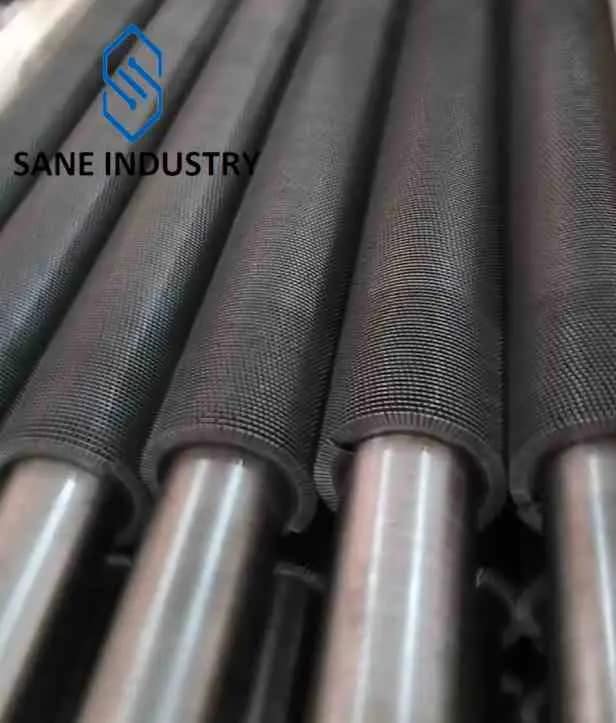
When someone in power generation or refining asks us for “fin tubes,” they are almost always talking about high frequency welded fin tubes. This is the process we run most frequently on our shop floor. A continuous fin strip is fed onto the rotating base tube while high‑frequency current passes through the contact point. The resistance heats the interface to forging temperature in milliseconds, and pressure rolls complete a metallurgical bond without filler metal.
Key Features:
- Metallurgical bonding with minimal thermal resistance
- The welding rate can reach 95%
- Anticorrosive and wear-resistant
- Strong anti-dust accumulation ability
- Cost-effective
Best For:
Power plant boilers, economizers, air preheaters, petrochemical process heaters, and waste heat recovery systems.
Our Production Capacity:
We have total four HFW fin tube production lines for heat exchangers. Monthly production capacity of 1,500 tons.
High Frequency Welded Fin Tubes for Heat Exchangers Technical Specifications Table
| Parameter | Our Standard Capability |
|---|---|
Base Tube OD |
16 to 350 mm |
Base Tube Wall Thickness |
2 to 30 mm |
Base Tube Length |
≤32,000 mm |
Base Tube Material |
Carbon steel (A179, A192, A210, etc.), stainless steel (304/316L, etc.), alloy steel |
Fin Pitch |
39 to 277 FPM |
Fin Height |
8 to 35 mm |
Fin Thickness |
0.5 to 3 mm |
Fin Material |
Carbon Steel, 2.25Cr-1Mo, 5Cr-0.5Mo, 11-13Cr (409, 410), 18Cr-8Ni (SS 304), 25Cr-20Ni |
Fin Type |
Solid or serrated |
Description:
We added laser welding capability about three years ago primarily for customers building compact HVAC coils and refrigeration evaporators. The process uses a focused laser beam to fuse the fin to the tube with an extremely narrow heat‑affected zone. On our laser welding fin tube production line, we consistently see bond rates above 98% when checked under marco test.
Key Features:
- Bond rate > 98% with minimal heat-affected zone
- Excellent resistance to thermal fatigue and vibration
- Compatible with the combined processing of different materials
- Ultra-thin, high-density fins
Best For:
High-efficiency HVAC systems, refrigeration condensers/evaporators, aerospace heat exchangers, and applications with frequent thermal cycling.
Our Production Capacity:
We have total two laser welded fin tube production lines for heat exchangers. Monthly production capacity of 24,000 meters.
Laser Welded Fin Tubes for Heat Exchangers Technical Specifications Table
| Parameter | Our Standard Capability |
|---|---|
Base Tube OD |
12 to 168 mm |
Base Tube Wall Thickness |
1 to 20 mm |
Base Tube Length |
≤32,000 mm |
Base Tube Material |
Carbon steel (A179, A192, A210, etc.), stainless steel (304/316L, etc.), alloy steel, aluminum, copper, titanium |
Fin Pitch |
39 to 512 FPM |
Fin Height |
5 to 25 mm |
Fin Thickness |
0.3 to 1 mm |
Fin Material |
Carbon steel, stainless steel, alloy steel, aluminum, copper, titanium |
Description:
G fin tubes for heat exchangers — sometimes called embedded fin tubes or grooved fin tubes — represent a significant portion of our weekly production volume. The process cuts a helical groove into the base tube wall, then rolls an aluminum or copper fin strip into that groove. The groove edges are peened over to mechanically lock the fin in place.
Key Features:
- No welding involved
- Allows dissimilar material combinations
- Lower costs than welded fin tubes
- Good thermal contact at moderate operating temperatures
Best For:
Air‑cooled heat exchangers, HVAC condenser coils, moderate‑temperature process coolers, and applications where cost is a primary consideration.
Our Production Capacity:
We have total six G fin tube production lines for heat exchangers. Monthly production capacity of 180,000 meters.
G Fin Tube for Heat Exchangers Technical Specifications Table
| Parameter | Our Standard Capability |
|---|---|
Base Tube OD |
19 to 73 mm |
Base Tube Wall Thickness |
1.5 to 8 mm |
Base Tube Length |
≤32,000 mm |
Base Tube Material |
Carbon steel (A179, A192, A210, etc.), stainless steel (304/316L, etc.), alloy steel, aluminum, copper, titanium |
Fin Pitch |
118 to 472 FPM |
Fin Height |
5 to 20 mm |
Fin Thickness |
0.4 to 1 mm |
Fin Material |
Aluminum, copper |
Description:
The name of low fin tubes for heat exchangers comes from the fin profile: typically only 0.2 mm to 1.5 mm in height, much lower than the 5‑20 mm fins found on HFW or G‑fin tubes. We start with a plain tube that has a thicker wall than the finished product requires. That tube passes through a series of finning rolls that cold‑form the fins directly from the base tube wall. The result is a monolithic component — the fins and tube are one continuous piece of metal.
Key Features:
- Monolithic construction
- Zero thermal contact resistance
- Excellent resistance to corrosion and thermal fatigue
- No risk of galvanic corrosion (single material)
Best For:
Shell-and-tube heat exchangers, chemical processing, marine applications, desalination plants, and corrosive environments where bimetallic contact must be avoided.
Our Production Capacity:
We have total six low fin tube production lines for heat exchangers. Monthly production capacity of 140,000 meters.
Low Fin Tubes for Heat Exchangers Technical Specifications Table
| Parameter | Our Standard Capability |
|---|---|
Base Tube OD |
8 to 32 mm |
Base Tube Wall Thickness |
0.8 to 3 mm |
Base Tube Length |
≤32,000 mm |
Base Tube Material |
Carbon steel (A179, A192, A210, etc.), stainless steel (304/316L, etc.), alloy steel, aluminum, copper, titanium |
Fin Pitch |
629 to 1653 FPM |
Fin Height |
0.2 to 1.5 mm |
Fin Thickness |
0.27 to 1 mm |
Fin Material |
Same as base tube |
Other Finned Tube Products You May Need
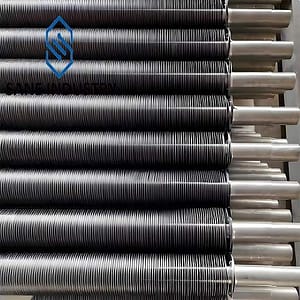
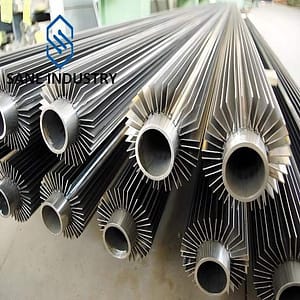
Industries That Rely on SANE's Fin Tubes for Heat Exchangers
Our finned tubes for heat exchangers are installed in below industries and equipments:
Petrochemical
Process heaters, crude preheat exchangers, reactor coolers
Power Generation
Boiler economizers, air preheaters, HRSG finned tubing
HVAC & Refrigeration
Evaporators, condensers, cooling coils — often G fin tubes for heat exchangers
Oil & Gas
Compressor intercoolers, LNG vaporizers, gas processing
Chemical Processing
Low fin tubes for heat exchangers in corrosive and high‑purity service
Waste Heat Recovery
Flue gas coolers, economizers, heat recovery steam generators
Above list represents the industries we serve most frequently, but our finned tubes for heat exchangers have also been installed in marine engine cooling loops, food pasteurization lines, and aerospace thermal test stands. If your application is not listed, send us your specifications — we will tell you honestly whether we can support it.
How to Select the Right Finned Tubes for Heat Exchangers
Step 1: Define Your Operating Conditions & Parameters
Before we recommend the finned tube type, we need to know the following information:
- Your fin‑side fluid type (air, flue gas, refrigerant, etc.)
- Your tube‑side type fluid (water, steam, oil, glycol, etc.)
- Maximum temperature and pressure
- Any corrosive constituents present
Step 2: Select Base Tube and Fin Material
- Carbon steel for steam, water, clean gases conditions
- Stainless stainless for corrosion resistance or high temperature conditions
- Copper / CuNi for seawater, high conductivity, legacy compatibility conditions
- Nickel alloys for extreme environments conditions (we can source Inconel/Incoloy)
Step 3: Choose the Fin Tube Type Based on Service Conditions
- HFW finned tubes for heat exchangers: High temp/pressure, large volumes
- G fin tubes for heat exchangers: Moderate temp, cost‑sensitive, air‑cooled
- Low fin tubes for heat exchangers: Corrosive shell‑side, tight tube pitch
- Laser welded finned tubes for heat exchangers: High cycle fatigue, precision
Step 4: Determine the Parameters of the Fins
- Taller fins: More surface area (watch vibration risk)
- Tighter pitch: More area (watch fouling potential)
- Thicker fins: For high‑temperature strength
- Our engineers will help optimize pitch, height, and thickness for your specific duty
To facilitate the selection process for the purchasing engineers, we have specially prepared the following comparison table of finned tubes for heat exchangers to enable them to compare the advantages and disadvantages horizontally.
Comparison Table of Finned Tubes for Heat Exchangers
| Type | Bond Method | Max. Temp. | Cost Level | Pros | Cons | Best Application |
|---|---|---|---|---|---|---|
High Frequency Welded Finned Tubes for Heat Exchangers |
HF welding |
600℃ |
Moderate |
High bond strength, handles high pressure |
Requires specialized welding equipment |
Power generation, high‑pressure economizers |
Laser Welded Finned Tubes for Heat Exchangers |
Laser welding |
600℃ |
High |
Highest bond strength |
High Cost |
High‑cycle fatigue, compact HVAC |
G Fin Tubes for Heat Exchangers |
Mechanical lock |
300℃ |
Low |
Most economical fin type. Allows aluminum fins on steel tubes |
Fins may become loose under excessive vibration |
Air‑cooled exchangers, HVAC coils |
Low Fin Tubes for Heat Exchangers |
Monolithic (no joint) |
300℃ |
Moderate |
Zero thermal contact resistance |
Limited fin height |
Corrosive shell‑side, shell‑and‑tube units |
Why Engineers and Buyers Source Fin Tubes for Heat Exchangers from SANE Industry
We SANE Industry is a manufacturer that has been specializing in the production of heat exchanger fin tubes for over 15 years. With more than 100 satisfied customers across 20+ countries. The finned tubes are no longer just a business, they are the products we come into contact with and produce every day.
1. Strict Quality Control
For each order, we will formulate an inspection and test plan (ITP). Whether before production or during the production process, our inspectors will strictly follow the ITP to inspect each step and prepare a report. If necessary, a third-party inspection can also be conducted.
2. Fully Traceable
We buy raw metarials directly from approved mills and maintain heat number traceability from raw material to finished fin tube. The complete set of documents including the Mill Test Certificate (EN 10204 3.1/3.2), inspection reports, final data book, etc. can be obtained.
3. Real Technical Support
We don’t just sell fin tubes for heat exchangers — we act as an extension of your engineering and procurement team. From initial design consultation and material selection guidance, to after-sales technical support and troubleshooting, our team is available 24/7 to support your project.

Frequently Asked Questions
Q: What is the difference between G fin tubes for heat exchangers and low fin tubes for heat exchangers?
A: The fundamental difference lies in how the fin is attached and what that means for your exchanger. With G‑fin tubes for heat exchangers, we cut a helical groove into the base tube wall, then roll an aluminum or copper fin strip into that groove and peen the edges over to lock it in place. It’s a mechanical bond that works well up to about 300°C and is the most cost‑effective option when your tube‑side fluid is non‑corrosive and the exchanger sees steady‑state operation.
Low fin tubes for heat exchangers are a different animal altogether. We start with a thicker‑wall plain tube and cold‑form the fins directly from that wall — there is no separate fin strip and no joint whatsoever. The entire tube, fins included, is one monolithic piece of metal. That means zero thermal contact resistance and no path for galvanic corrosion between dissimilar metals. We typically recommend low fin tubes for heat exchangers when the shell‑side fluid is corrosive, when the exchanger has a tight tube pitch, or when thermal cycling is frequent enough to potentially loosen a mechanical bond.
Q: When should I specify finned tubes for heat exchangers instead of bare tubes?
A: You should be looking at finned tubes for heat exchangers whenever the heat transfer coefficient on the outside of the tube is significantly lower than on the inside. In practical terms, this almost always means the external fluid is a gas — air, flue gas, refrigerant vapor — while the internal fluid is a liquid or condensing steam. The gas‑side resistance can be 10 to 50 times higher than the liquid side, and a bare tube simply cannot overcome that bottleneck.
By adding fins, we expand the external surface area three to ten times, directly compensating for the poor gas‑side coefficient. We have walked customers through this evaluation many times: if you are building an air‑cooled exchanger, an economizer, or an evaporator coil, you are almost certainly better off with finned tubes for heat exchangers. The only time bare tubes make sense is when both fluids have similar heat transfer coefficients — like liquid‑to‑liquid exchangers — or when the external fluid is so fouling that fins would clog.
Q: What is the typical delivery time for fin tubes for heat exchangers from SANE Industry?
A: It depends on the fin type and the volume of your order, but we give every customer a firm shipping date on the quotation. Standard HFW fin tubes for heat exchangers and G‑fin tubes for heat exchangers in sizes we run regularly typically leave our facility within 10 to 20 working days. For low fin tubes for heat exchangers, laser welded finned tubes for heat exchangers, or large custom runs, the window is usually 30 to 40 working days because of the additional setup and slower production speeds.
If you are working against a plant shutdown or a tight turnaround, tell us upfront. We can often adjust our production schedule to pull in an urgent job, and we will be honest about what is realistically achievable.
Q: Can SANE Industry customize fin tubes for my unique heat exchanger design?
A: Yes, and we do it routinely. While we maintain tooling for common base tube diameters and fin geometries, a large portion of our work involves finned tubes for heat exchangers that deviate from catalog dimensions. We can adjust base tube OD, wall thickness, fin height, fin pitch, fin thickness, and the material combination to match your thermal design.
Our engineering team reviews every custom request against what is physically possible with our equipment. For most inquiries, we can confirm feasibility within a day. If we spot a potential issue — like a fin height too tall for the base tube diameter, which can cause vibration problems — we will flag it and suggest an alternative before we quote.
Q: What materials are available for fin tubes for heat exchangers?
A: The starting point is always the service conditions. For most fin tubes for heat exchangers that handle steam, water, or clean gases, we use carbon steel base tubes to ASTM A179 or A192 paired with aluminum fins (A1100). That combination gives you good thermal conductivity at a reasonable cost.
When corrosion resistance is required, we shift to 304 or 316L stainless steel base tubes, either with stainless steel fins or aluminum fins depending on temperature. For seawater or brackish water service, copper‑nickel base tubes (C70600) are common, especially for low fin tubes for heat exchangers. We can also source nickel alloys — Inconel 625, Incoloy 825 — when the environment is extremely aggressive or the operating temperature exceeds what stainless steel can handle. Fin materials follow the same logic: aluminum for conductivity and economy, carbon steel for high‑temperature strength, stainless steel for corrosion matching, and copper when maximum heat transfer is the priority.
Q: How high a temperature can G fin tubes for heat exchangers handle?
A: We rate G‑fin tubes for heat exchangers up to 300°C in continuous service. The limitation is not the materials themselves — aluminum fins and carbon steel base tubes can individually survive much higher temperatures — but the mechanical bond between them. Aluminum expands roughly twice as much as carbon steel when heated. At moderate temperatures, this actually helps because the aluminum fin grips the steel groove more tightly. But above about 300°C, the differential expansion becomes large enough that the fin can begin to loosen over repeated cycles.
For applications that run hotter than 300°C, we steer customers toward HFW fin tubes for heat exchangers, where the metallurgical bond eliminates this concern entirely, or toward stainless steel fin‑tube combinations that have more closely matched expansion rates.
Q: Are low fin tubes for heat exchangers suitable for high‑pressure tube‑side service?
A: The pressure rating of low fin tubes for heat exchangers is determined by the base tube wall thickness and material, not by the finning process itself. Because the fins are formed from the base tube wall, the tube’s pressure‑bearing capability is preserved as long as we start with a sufficiently thick wall. Our engineering team calculates the required minimum wall thickness based on your design pressure, temperature, and the applicable code — typically ASME Section VIII or TEMA.
That said, there is a practical constraint: to form fins from the tube wall, the starting wall thickness must be greater than a plain tube of the same OD would require. We factor this into every quotation and will confirm the final wall thickness and pressure rating before production.
Q: What quality checks do your finned tubes for heat exchangers undergo before shipping?
A: Our quality control is built into the production flow, not applied as a final inspection afterthought. For every batch of finned tubes for heat exchangers leaving our facility, we start with incoming base tube and fin strip verification — each heat of material arrives with a mill test certificate, and we confirm chemistry and mechanical properties against the standard.
During production, our operators will randomly select several tubes each shift to check the welding quality and the geometrical characteristics. We measure fin height, pitch, fin thickness and OD at multiple points along each tube. The final shipment includes an EN 10204 3.1 Material Test Certificate with full traceability back to the heat number.
Q: What is the typical minimum order quantity for fin tubes for heat exchangers?
A: For standard high frequency welded fin tubes and G‑fin tubes for heat exchangers in common sizes, the practical minimum is around 100 to 200 meters. For low fin tubes for heat exchangers and laser welded fin tubes, we can sometimes accommodate smaller prototype or repair quantities. Send us your requirements — we do not enforce a rigid MOQ policy, especially for customers working on first‑article builds or emergency retubing jobs.
Q: Which ASTM or ASME standards apply to your finned tubes for heat exchangers?
A: Base tube material is certified to the applicable ASTM standard — typically A179 or A192 for carbon steel, A213 or A312 for stainless steel, and B111 for copper alloys. The finning process itself is not governed by a specific ASTM standard, but our in‑house quality procedures align with dimensional and testing requirements commonly referenced in ASME Section VIII and TEMA heat exchanger specifications.
Q: Can you match an existing fin tube sample I send you?
A: Yes, we do this regularly for retubing and replacement jobs. Send us a short sample or a detailed drawing with OD, fin height, fin pitch, and material callouts. Our quality team will reverse‑engineer the geometry and confirm we can match it before quoting.
Request a Quote for Fin Tubes for Heat Exchangers — Response Within 12 Hours
Direct Contact
- allen@sanesteel.com
- +8617766383215
- +8617766383215
We review every finned tubes inquiry for heat exchangers with a technical eye. If you include base tube size, fin geometry, and material preferences, we can often return a budgetary quote the same day.
Fin Tubes for Heat Exchangers Related Resources
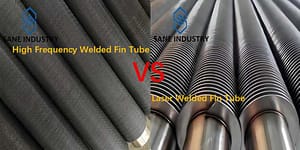
High Frequency Welded Fin Tubes vs Laser Welded Fin Tubes
High Frequency welded fin tubes and laser welded fin tubes are two dominant technologies in industrial heat exchange systems, each engineered for distinct operational demands.
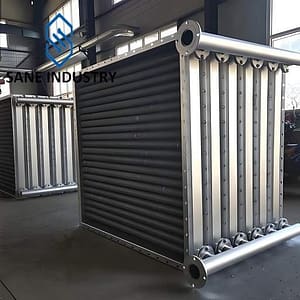
What is a Finned Tube Heat Exchanger?
Finned tube heat exchangers are specialized thermal transfer devices designed to enhance heat exchange between two fluids with significantly different heat transfer coefficients. These exchangers
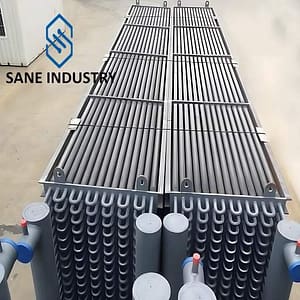
How Does a Fin Tube Radiator Work 2025?
Fin tube radiators, as indispensable heat exchange equipment in modern industrial and civilian fields, play a crucial role in multiple industries including energy, chemical engineering,

What is a fin tube? A complete guide 2025
Fin tubes(Finned tubes), as indispensable high-efficiency heat exchange components in modern industry, significantly enhance heat transfer efficiency by increasing the heat transfer surface area, playing

What is the difference between a bare tube and a finned tube?
Bare tubes and finned tubes represent two fundamental categories of heat transfer components used across various industrial applications. While both serve the purpose of facilitating

What is a finned tube? The use and advantage of a finned tube?
A finned tube is a heat-transfer tube enhanced with metal fins to boost surface area and improve thermal efficiency. It’s widely used in heat exchangers,

What are the differences between seamless and welded Pipe?
Steel pipes are fundamental components in various industries, including oil and gas, construction, automotive, and manufacturing. The two primary types of steel pipes – seamless

How many types of finned tubes are there?
Finned tubes are essential components in heat exchangers, designed to enhance heat transfer efficiency by increasing the surface area available for thermal exchange. These tubes