
Finned Tube for Air Coolers
Reliable Air Cooling Fin Tube for Industrial Heat Rejection
Air cooled finned tube heat exchangers live or die by the quality of their finned tubes. A poorly bonded fin, a bent tube, or a geometry that does not match the thermal duty — any of these will eat into your cooling capacity and drive up operating costs. We manufacture finned tube for air coolers with the understanding that these tubes sit in the open air, often in hot, dusty, or coastal environments, and must perform year after year without attention.
We SANE Industry produces air cooler fin tube in G‑Fin, L/LL/KL type fin, extruded fin, and high‑frequency welded configurations. Whether you are retubing an existing air‑cooled exchanger or specifying tubes for a new build, we can match the original geometry or help you optimize for higher efficiency.
ISO 9001:2015 Certified
All manufacturing and testing in our factory are strictly in accordance with ISO standards.
Rich Industry Experience
Specializing in the production of finned tubes for over 15 years, serving more than 100 clients worldwide.
The Strictest Quality Control
From raw materials to the final product, every stage is strictly controlled for quality. TÜV, SGS, BV inspection available.
Full Material Traceability
We ensure full traceability via EN 10204 3.1 or 3.2 mill test certificates and complete records throughout the entire process.
Why the Performance of an Air‑Cooled Exchanger Starts with the Air Cooling Fin Tube
An air‑cooled heat exchanger is, at its core, a bank of finned tubes with fans blowing air across them. The thermal duty is almost always limited by the air‑side heat transfer coefficient — air is a poor heat transfer medium compared to water or oil. That is why the air cooling fin tube matters so much. The fins multiply the external surface area that contacts the air, and their geometry directly determines how effectively heat moves from the process fluid inside the tube to the atmosphere.
But surface area is only half the story. In an air cooler sitting on a refinery platform or a power plant roof, the finned tube for air coolers must also withstand thermal cycling, wind‑induced vibration, airborne dust, and sometimes salt spray. A fin that separates from the tube — even partially — creates a hot spot that grows over time. We have seen exchangers lose 20% of their rated capacity within two years because the fin bond degraded.
At SANE Industry, we manufacture a full range of finned tube for air cooling, covering the wound fin family that dominates the installed base of air coolers worldwide: L‑type, LL‑type, and KL‑type for limited budget, G fin tubes for standard retubing and new builds, extruded fin tubes where corrosion resistance or zero contact resistance is required, and HFW air cooler fin tube for high‑temperature process duties. Each type brings different strengths to the table, and we help customers match the fin tube to the actual operating conditions rather than relying on assumptions.

Types of Finned Tube for Air Coolers We Manufacture
Description:
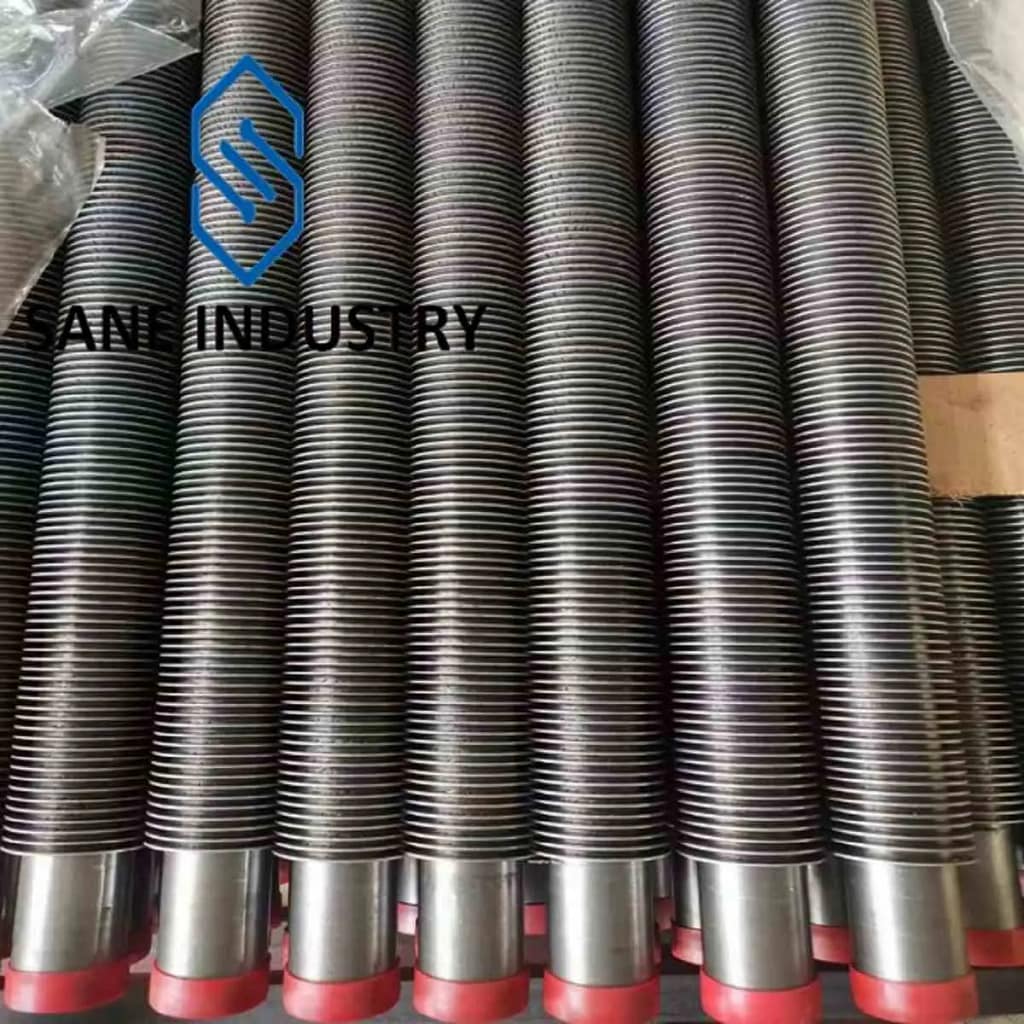
Walk through any refinery, gas processing plant, or power station and the air‑cooled exchangers you see are almost certainly fitted with G Finned tubes. G finned tube for air coolers — sometimes called embedded fin tubes or grooved fin tubes — are the most common air cooler fin tubes. This air cooling fin tube gets its name from the helical groove cut into the base tube — the fin strip, usually aluminum, is rolled into that groove and mechanically locked in place by peening over the groove edges.
Key Features:
- No welding involved
- The most widely used air cooler fin tube
- Lower costs than welded fin tubes
- Good thermal contact at moderate operating temperatures
Best For:
Air‑cooled heat exchangers, HVAC condenser coils, moderate‑temperature process coolers, and applications where cost is a primary consideration.
Our Production Capacity:
We have total six G finned tube production lines for air coolers. Monthly production capacity of 180,000 meters.
G Finned Tube for Air Coolers Technical Specifications Table
| Parameter | Our Standard Capability |
|---|---|
Base Tube OD |
19 to 73 mm |
Base Tube Wall Thickness |
1.5 to 8 mm |
Base Tube Length |
≤32,000 mm |
Base Tube Material |
Carbon steel (A179, A192, A210, etc.), stainless steel (304/316L, etc.), alloy steel, aluminum, copper, titanium |
Fin Pitch |
118 to 472 FPM |
Fin Height |
5 to 20 mm |
Fin Thickness |
0.4 to 1 mm |
Fin Material |
Aluminum, copper |
Description:
L type fin tube is the simplest and most widely used wound fin tube. We fold the fin strip into an L‑shaped foot and tension‑wind it onto the base tube so the foot sits firmly against the tube surface. The result is a cost‑effective air cooling fin tube that handles steady‑state operation well.
LL type fin tube is the direct evolution of the L type. We manufacture it the same way, but with one critical difference: each fin foot overlaps the previous one completely, forming a continuous double‑layer LL foot that fully encapsulates the base tube surface.
KL type fin tube, also called knurled L‑foot fin tube, adds one more step to the L‑type manufacturing process. Before winding the fin strip onto the base tube, we knurl the outer surface of the tube. Then, as the L‑shaped fin foot is wound under tension, the fin root is knurled into the corresponding knurling on the tube. The result is a mechanical interlock between fin and tube that significantly improves both thermal contact and bond strength.
Key Features:
- No welding and no groove cutting involved
- Allows dissimilar material combinations
- The lowest total cost
- Progressive corrosion protection
Best For:
L‑Type: indoor or sheltered air coolers, steady temperatures below 150°C, clean dry air
LL‑Type: outdoor air coolers in humid, coastal, or mildly corrosive atmospheres up to 170°C
KL‑Type: dusty or particulate‑heavy environments, thermal cycling duty, elevated temperatures up to 250°C
Our Production Capacity:
We have total six L/LL/KL finned tube production lines for air coolers. Monthly production capacity of 180,000 meters.
L, LL, KL Type Finned Tube for Air Coolers Technical Specifications Table
| Parameter | Our Standard Capability |
|---|---|
Base Tube OD |
19 to 73 mm |
Base Tube Wall Thickness |
0.8 to 5 mm |
Base Tube Length |
≤32,000 mm |
Base Tube Material |
Carbon steel (A179, A192, A210, etc.), stainless steel (304/316L, etc.), alloy steel, aluminum, copper, titanium |
Fin Pitch |
118 to 472 FPM |
Fin Height |
5 to 20 mm |
Fin Thickness |
0.4 to 1 mm |
Fin Material |
Aluminum, copper |
Fin Type |
L, LL, KL |
Description:
Coastal refineries, offshore platforms, and chemical plants often have one thing in common: the air moving through the cooler is laden with salt, moisture, or trace chemicals. In those environments, a bimetallic fin tube — aluminum fin on steel tube — can set up galvanic corrosion at the fin root. That is when we recommend extruded fin air cooler fin tube.
We manufacture this air cooling fin tube by cold‑forming fins directly from a thicker‑walled aluminum muff tube which is closely fitted over the base tube, creating a seamless and highly conductive bond, optimizing performance in extreme thermal and corrosive environments.
Key Features:
- Zero-gap, no groove, and no joint
- Zero thermal contact resistance
- Excellent resistance to corrosion and thermal fatigue
Best For:
Coastal and offshore air coolers exposed to salt spray and high humidity, chemical plant air coolers handling corrosive atmospheres
Our Production Capacity:
We have total twelve extruded finned tube production lines for air coolers. Monthly production capacity of 150,000 meters.
Extruded Finned Tube for Air Coolers Technical Specifications Table
| Parameter | Our Standard Capability |
|---|---|
Base Tube OD |
19 to 60.3 mm |
Base Tube Wall Thickness |
0.5 to 4 mm |
Base Tube Length |
≤32,000 mm |
Base Tube Material |
Carbon steel (A179, A192, A210, etc.), stainless steel (304/316L, etc.), alloy steel, aluminum, copper |
Fin Pitch |
78 to 472 FPM |
Fin Height |
5 to 16 mm |
Fin Thickness |
0.3 to 1.2 mm |
Fin Material |
aluminum, copper |
Description:
Most air coolers operate with process fluid inlet temperatures between 100°C and 250°C — comfortably within G‑Fin territory. But we also see applications where the air cooler sits downstream of a reactor, a furnace, or a compressor that pushes inlet temperatures above 300°C. In those cases, we supply HFW finned tube for air coolers.
The high‑frequency welding process fuses the fin strip to the base tube at a metallurgical level. The result is a bond that we have tested to failure — the fin tears before the weld separates. That bond integrity holds at temperatures up to 600°C, making HFW air cooling fin tube suitable for the hottest air cooler duties.
Key Features:
- Metallurgical bond that exceeds the base tube strength
- The welding rate can reach 95%
- Anticorrosive and wear-resistant
- Handles the highest temperatures of any air cooler fin tubes
Best For:
High‑temperature process air coolers with inlet temperatures above 300°C, reactor effluent coolers and furnace‑downstream air coolers
Our Production Capacity:
We have total four HFW finned tube production lines for air coolers. Monthly production capacity of 1,500 tons.
High Frequency Welded Finned Tube for Air Coolers Technical Specifications Table
| Parameter | Our Standard Capability |
|---|---|
Base Tube OD |
16 to 350 mm |
Base Tube Wall Thickness |
2 to 30 mm |
Base Tube Length |
≤32,000 mm |
Base Tube Material |
Carbon steel (A179, A192, A210, etc.), stainless steel (304/316L, etc.), alloy steel |
Fin Pitch |
39 to 277 FPM |
Fin Height |
8 to 35 mm |
Fin Thickness |
0.5 to 3 mm |
Fin Material |
Carbon Steel, 2.25Cr-1Mo, 5Cr-0.5Mo, 11-13Cr (409, 410), 18Cr-8Ni (SS 304), 25Cr-20Ni |
Fin Type |
Solid or serrated |
Other Finned Tube Products You May Need
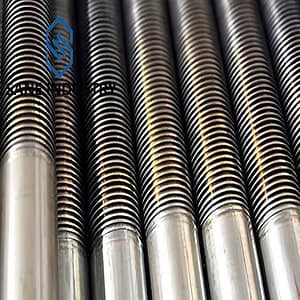
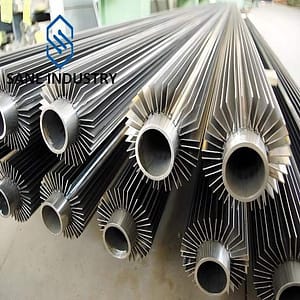
Where SANE Industry's Air Cooler Fin Tube Is Installed
Our finned tube for air coolers are installed in below industries and equipments:
Petrochemical & Refining
Reactor effluent air coolers, overhead condensers, product coolers
Power Generation
Generator cooling air coolers, bearing lube oil coolers
Mining & Minerals
Compressor cooling, hydraulic oil cooling in dusty environments
Oil & Gas Processing
Compressor intercoolers and aftercoolers, gas dehydration cooler banks
Chemical Plants
Process air coolers for exothermic reactions, solvent recovery
Offshore & Marine
Platform process air coolers, seawater‑resistant finned tube for air cooling
Our finned tube for air coolers is in operation from Middle East desert installations to North Sea platforms. Each environment places different demands on the air cooling fin tube — dust erosion in the desert, salt spray offshore, sub‑zero winter temperatures in northern sites. We factor these conditions into our material and geometry recommendations so the tubes you receive are matched to where they will operate.
How to Specify the Right Air Cooler Fin Tube
Step 1: Define the Operating Conditions
Before we recommend the finned tube type, we need to know the following information:
- Process fluid and its inlet/outlet temperatures
- Design pressure (tube side)
- Ambient air temperature range (summer and winter)
- Atmospheric conditions (coastal, dusty, corrosive gases)
- Available plot space (impacts allowable pressure drop)
Step 2: Select Base Tube and Fin Material
- Carbon steel: Low cost and high strength, it is suitable for non-corrosive media environments.
- Stainless steel (304/316L): Resistant to acid and alkali corrosion, it is suitable for harsh environments such as chemical exhaust gas cooling.
- Copper: It has the highest thermal conductivity, and is suitable for applications with high efficiency requirements (such as air conditioning). Nickel plating can be applied to improve corrosion resistance.
- Aluminum: With good thermal conductivity and moderate cost, it is the most commonly used fin material for air coolers.
- Steel-aluminum composite: This combines the pressure resistance of steel tubes with the high thermal conductivity of aluminum. It is the mainstream choice for air cooling fin tubes.
Step 3: Match Fin Type to the Air Cooler Environment
- L type air cooling fin tube: Standard air coolers, indoor/sheltered, clean air, stable temperatures below 150°C
- LL type finned tube for air coolers : Outdoor air coolers, coastal or humid environments, superior corrosion resistance, up to 170°C
- KL type air cooler fin tube: Higher temperatures up to 250°C, dusty or particulate-laden air, thermal cycling duty, improved heat transfer
- G fin air cooling fin tube: Standard air coolers, moderate temperatures, clean to moderately dusty air, most common retubing match
- Extruded cooling fin tube: Coastal or corrosive atmospheres, zero contact resistance, tight bundle pitch
- HFW air cooler fin tube: Inlet temperatures above 300°C, process air coolers handling hot gas
Step 4: Confirm Fin Geometry
- Fin height and pitch determine surface area and air‑side pressure drop
- Tighter pitch = more area but higher fan power and fouling risk
- We help optimize fin geometry based on your thermal design data
- Retubing jobs: send us the existing tube geometry and we match it
To help purchasing engineers make faster, more informed decisions, we have put together the side‑by‑side comparison table below. It maps out the key pros and cons of each finned tube for air coolers at a glance.
Comparison Table of Finned Tube for Air Cooling
| Type | Bond Method | Max. Temp. | Cost Level | Pros | Cons | Best Application |
|---|---|---|---|---|---|---|
L Type Finned Tube for Air Cooling |
Tension-wound, L-shaped foot |
150℃ |
Lowest cost |
Lowest cost; fast production; easy to match for retubing |
not for outdoor/corrosive air; can loosen above 150°C |
Indoor air coolers, compressor intercoolers, steady-state duty |
LL Type Finned Tube for Air Cooling |
Tension-wound, overlapping double-L foot |
170℃ |
Lower |
Full base tube coverage; excellent atmospheric corrosion resistance; better heat transfer than L-type |
Slightly higher cost than L-type; not for temperatures above 170°C; not for heavy vibration |
Outdoor air coolers, coastal refineries, humid environments |
KL Type Finned Tube for Air Cooling |
Tension-wound, knurled base tube + fin foot interlock |
250℃ |
Low |
Strongest mechanical bond of wound types; resists thermal cycling; handles dusty air |
Knurling step adds cost over L/LL; not for temperatures above 250°C |
High-temp air coolers, dusty/particulate air, frequent cycling duty |
G Finned Tube for Air Cooling |
Mechanical lock in grooved tube |
300℃ |
Low |
Most common air cooling fin tube. Allows aluminum fins on steel tubes |
Mechanical bond can loosen above 300°C; not for corrosive air unless fin material upgraded |
Standard air coolers, process cooling, legacy retubing |
Extruded Finned Tube for Air Cooling |
Monolithic (no joint) |
300℃ |
Moderate |
Zero thermal contact resistance; zero galvanic corrosion risk |
Higher manufacturing cost; requires thicker tube wall |
Coastal and offshore air coolers, corrosive atmospheres |
High Frequency Welded Finned Tube for Air Cooling |
HF welding |
600℃ |
Moderate |
Highest bond strength; no temperature limit in air cooler service |
Highest per-meter cost of air cooling fin tubes |
High-temperature process air coolers, reactor effluent coolers |
Why Buyers Source Air Cooling Fin Tube from SANE Industry
We SANE Industry is a manufacturer that has been specializing in the production of finned tube for air coolers for over 15 years. With more than 100 satisfied customers across 20+ countries. Our facility runs dedicated tooling for L/LL/KL-Fin, G‑Fin, extruded, and HFW air cooling fin tubes, which means we can switch between fin types to meet a mixed order without compromising quality or lead time.
1. Rigid Quality Control
Before we run any air cooler fin tube order, our quality team drafts an Inspection and Test Plan (ITP) tailored to the project. Whether your finned tube for air cooling will sit on a coastal platform breathing salt air or on a desert gas plant pulling in dust-laden wind, the ITP defines hold points for fin bond integrity, dimensional checks, and straightness verification specific to that duty. Every inspection step is documented, and we can arrange third-party witness testing if your project requires it.
2. Full Material Traceability Back to the Mill
Every air cooler fin tube we ship starts with raw material sourced from approved mills. We track the heat number from the base tube blank through finning, final inspection, and crating. Your shipment arrives with a complete document package — Material Test Certificate to EN 10204 3.1 or 3.2, dimensional inspection reports, and a final data book if specified. When your incoming QC team checks the paperwork against the tubes in the crate, they match.
3. Real Engineering Support, Not Just Sales
We don’t treat air cooling fin tube as a commodity item. When you send us an inquiry for finned tube for air coolers, you are connected with engineers who understand air-side pressure drop, fin efficiency curves, and the trade-offs between wound, G-fin, extruded, and welded types. Need help deciding whether KL-type is worth the upgrade over L-type for a dusty operating site? Our team can walk you through that decision and back it with operating data from similar installations. And if a problem surfaces after delivery, the same engineers who approved your order are available to troubleshoot — not a generic call center.

Frequently Asked Questions
Q: What types of finned tube for air coolers does SANE Industry manufacture?
A: We produce the full range of air cooler fin tube types that cover virtually every industrial air cooling duty. Our wound fin family includes L‑type, LL‑type, and KL‑type finned tube for air cooling — these are the most common choices for standard air coolers up to 250°C. We also manufacture G‑Fin tubes (embedded type) for retubing and new builds where legacy geometry needs to be matched, extruded fin tubes for corrosive or coastal air environments, and high‑frequency welded (HFW) air cooling fin tube for high‑temperature process air coolers handling inlet temperatures up to 600°C. If you are unsure which type best fits your operating conditions, our engineering team will help you evaluate the options based on temperature, air quality, and budget.
Q: What is the most commonly used finned tube for air cooling in refinery and gas plant air coolers?
A: In our experience, G‑Fin tubes and L‑type wound fin tubes account for the majority of finned tube for air coolers installed in refineries and gas processing plants. G‑Fin has been the industry standard for decades, with an estimated 80% of air‑cooled exchangers in these facilities originally built with it. L‑type air cooling fin tube also has a large installed base, particularly on compressor intercoolers and lube oil coolers where the duty is steady and the air is relatively clean. When we quote a retubing job for a refinery air cooler, nine times out of ten we are matching either G‑Fin or L‑type geometry.
Q: When should I specify LL‑type instead of L‑type air cooler fin tube?
A: We recommend upgrading from L‑type to LL‑type air cooling fin tube whenever the air cooler sits outdoors in a humid, coastal, or mildly corrosive environment. The standard L‑type fin foot does not fully encapsulate the base tube, which leaves a narrow path for atmospheric moisture to reach the tube surface over time. LL‑type finned tube for air coolers solves this by overlapping each fin foot, creating a continuous aluminum jacket that completely covers the tube. For refineries near the coast or chemical plants with trace acid vapors in the air, the incremental cost of LL over L is small compared to the extended service life it delivers.
Q: What is the maximum operating temperature for KL‑type finned tube for air coolers?
A: We rate KL‑type finned tube for air cooling up to 250°C in continuous service. This makes it the highest‑temperature option within the wound fin family, well above L‑type (150°C) and LL‑type (170°C). The higher rating comes from the knurled mechanical interlock between the fin and the tube — we knurl the base tube surface before winding the fin under tension, which creates a bond that resists loosening far better than a smooth L‑foot when the exchanger cycles between hot and cold. For process air coolers operating between 170°C and 250°C where G‑Fin is also an option, we can help you weigh the cost and performance trade‑offs.
Q: Can SANE Industry supply finned tube for air coolers that matches an existing bundle?
A: Yes, we do this routinely. Send us a short sample of the existing air cooler fin tube — even a 100 mm cut section is usually enough — or provide a detailed drawing with base tube OD, fin height, fin pitch, and material callouts. Our quality team will measure the geometry, identify the fin type and manufacturing method, and confirm we can replicate it. If the original air cooling fin tube used a design that is no longer optimal for today’s operating conditions, we will flag that and offer upgrade options while still providing the choice to match the original exactly.
Q: How does SANE Industry protect finned tube for air cooling during shipping?
A: Air cooling fin tube is vulnerable to handling damage, especially along the fin edges. We pack every order of finned tube for air coolers in purpose‑built wooden crates with internal spacers and bracing that prevent the tubes from shifting against each other during transit. Each crate is lined with vapor‑barrier plastic to block humidity, and we add desiccant packs when the destination has a tropical or marine climate. Crates are labeled with tube specifications, quantity, and your purchase order number. If your site has specific lifting or rigging requirements, we can arrange crate markings and bundling accordingly.
Q: What lead time should I expect for a typical air cooler fin tube order?
A: For standard L‑type, LL‑type, and G‑Fin air cooler fin tube in common sizes, our facility typically ships within 15 to 25 days. KL‑type finned tube for air cooling, extruded fin tubes, and HFW air cooling fin tube generally fall in the 30 to 45 day window due to the additional manufacturing steps involved. These are firm ship dates that we include on every quotation. If your project is up against a plant turnaround deadline, let us know when you inquire — we can often adjust production scheduling to accommodate urgent jobs, and we will be upfront about what is realistically achievable.
Q: Does SANE Industry provide material certifications with finned tube for air coolers?
A: Absolutely. Every shipment of air cooler fin tube from Sane Steel is accompanied by a Material Test Certificate to EN 10204 3.1 as standard, with 3.2 available on request when third‑party witness testing is required. The MTC documents the chemical composition and mechanical properties of the base tube material, traceable back to the original mill heat number. We also include dimensional inspection reports covering fin height, fin pitch, and straightness. What you receive in the document package matches the tubes in the crate — we do not issue generic or “typical” reports.
Q: What fin material do you recommend for air cooling fin tube in desert environments?
A: For desert air coolers, aluminum fins (A1100 or 1060 grade) on carbon steel base tubes are our standard recommendation. Aluminum handles dry, abrasive air well and provides the thermal conductivity needed for efficient air‑side heat transfer. The main concern in desert service is erosion from wind‑blown sand and dust, not corrosion. We typically suggest a slightly thicker fin — 0.5 mm instead of the standard 0.4 mm — to provide extra erosion allowance. If the site also experiences occasional humidity or fog, we may recommend moving from L‑type to LL‑type finned tube for air cooling to protect the tube surface from intermittent moisture.
Q: Can I order a mixed batch of finned tube for air coolers — for example, part L‑type and part KL‑type in the same purchase order?
A: Yes, and we do this more often than you might expect. Because L, LL, and KL finned tube for air cooling share the same tension‑winding production platform, we can produce mixed fin types within a single order without retooling delays. This is particularly useful when retubing an air cooler bundle where different sections operate at different temperatures — cooler inlet sections might benefit from KL‑type for higher temperature resistance, while the outlet sections are well served by standard L‑type. We will ship the entire lot together, clearly labeled by fin type and bundle location.
Q: When should I use extruded finned tube for air cooling instead of G‑Fin?
A: We recommend extruded air cooling fin tube when the air intake is corrosive — coastal salt spray, chemical plant atmospheres, or any environment where moisture and contaminants would set up galvanic corrosion between an aluminum fin and a steel tube. Extruded tubes eliminate that risk because the fin and tube are the same monolithic material. We also recommend them when the design demands zero thermal contact resistance or when the tube bundle has a tight pitch that cannot accommodate taller fins.
Q: What is the minimum order quantity for air cooler fin tube?
A: We do not enforce a strict MOQ. For standard G‑Fin air cooler fin tube in common sizes, the practical minimum is around 100 meters. For extruded or HFW finned tube for air coolers, we can sometimes accommodate smaller quantities — down to 50 meters — depending on tooling. Emergencies and retubing jobs are a regular part of our business, and we will work with you even on small orders.
Request a Quote for Finned Tube for Air Coolers — We Respond Within 12 Hours
Direct Contact
- allen@sanesteel.com
- +8617766383215
- +8617766383215
We review every air cooler fin tube inquiry with our engineering team. Include your tube dimensions and operating conditions, and we can often return a budgetary quote the same day.
Finned Tube for Air Cooler Additional Resources
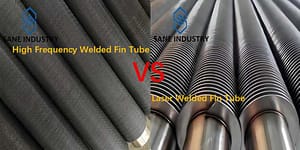
High Frequency Welded Fin Tubes vs Laser Welded Fin Tubes
High Frequency welded fin tubes and laser welded fin tubes are two dominant technologies in industrial heat exchange systems, each engineered for distinct operational demands.
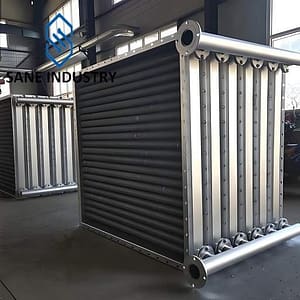
What is a Finned Tube Heat Exchanger?
Finned tube heat exchangers are specialized thermal transfer devices designed to enhance heat exchange between two fluids with significantly different heat transfer coefficients. These exchangers
How Does a Fin Tube Radiator Work 2025?
Fin tube radiators, as indispensable heat exchange equipment in modern industrial and civilian fields, play a crucial role in multiple industries including energy, chemical engineering,

What is a fin tube? A complete guide 2025
Fin tubes(Finned tubes), as indispensable high-efficiency heat exchange components in modern industry, significantly enhance heat transfer efficiency by increasing the heat transfer surface area, playing

What is the difference between a bare tube and a finned tube?
Bare tubes and finned tubes represent two fundamental categories of heat transfer components used across various industrial applications. While both serve the purpose of facilitating

What is a finned tube? The use and advantage of a finned tube?
A finned tube is a heat-transfer tube enhanced with metal fins to boost surface area and improve thermal efficiency. It’s widely used in heat exchangers,

What are the differences between seamless and welded Pipe?
Steel pipes are fundamental components in various industries, including oil and gas, construction, automotive, and manufacturing. The two primary types of steel pipes – seamless

How many types of finned tubes are there?
Finned tubes are essential components in heat exchangers, designed to enhance heat transfer efficiency by increasing the surface area available for thermal exchange. These tubes