
Extruded Serrated Finned Tubes
Enhanced Heat Transfer for High-Velocity Air Cooling Applications
Are your plain extruded fin tubes not providing enough cooling capacity? Do you need to reduce the size of your air cooler without sacrificing performance?
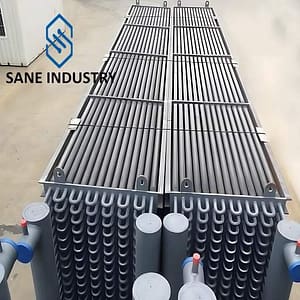
At SANE Industry, our serrated extruded fin tubes are engineered to deliver 20-30% higher heat transfer efficiency than plain extruded fins. The precision-cut serrations along the fin edges disrupt the stagnant thermal boundary layer, allowing more heat to be transferred to the surrounding air.
Unlike welded serrated fins that can create corrosion points, our serrated extruded fins are an integral part of the aluminum sleeve, maintaining the excellent corrosion resistance of our extrusion technology. This makes them ideal for high-velocity air coolers in both indoor and outdoor applications.
ISO 9001:2015 Certified
All manufacturing and testing in our factory are strictly in accordance with ISO standards.
Rich Industry Experience
Specializing in the production of finned tubes for over 15 years, serving more than 100 clients worldwide.
The Strictest Quality Control
From raw materials to the final product, every stage is strictly controlled for quality. TÜV, SGS, BV inspection available.
Full Material Traceability
We ensure full traceability via EN 10204 3.1 or 3.2 mill test certificates and complete records throughout the entire process.
What Is an Extruded Serrated Finned Tube?
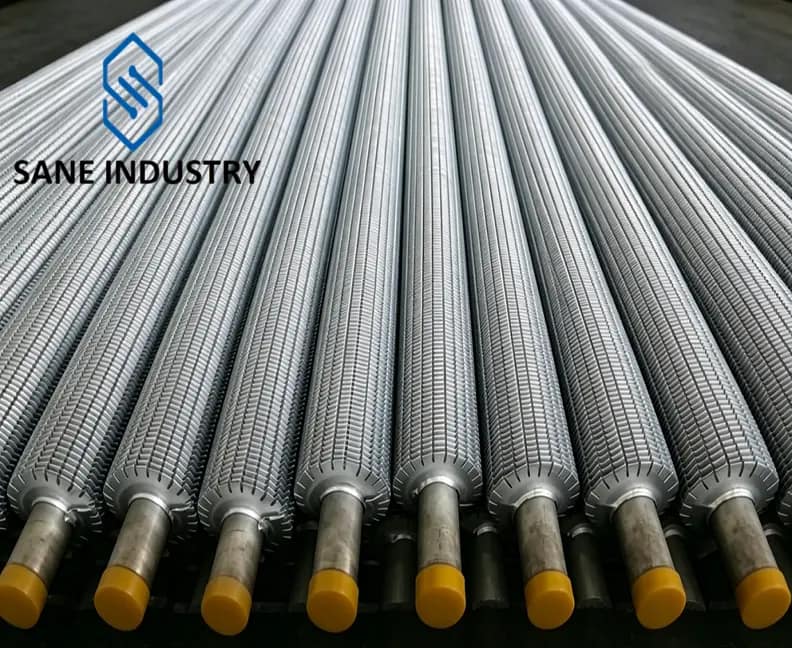
An extruded serrated finned tube starts with the same proven manufacturing process as any extruded finned tube — an aluminum outer layer is mechanically formed into fins through rotating extrusion dies. The fin grows directly out of the tube surface, integral and gapless. There is no weld bead, no mechanical wrap, no separate fin strip.
What makes it different is what happens next. After extrusion, the fin edges are precision-cut with a serrated pattern. Each serration notch breaks up the boundary layer of air or gas flowing across the fin surface, creating controlled micro-turbulence that increases the local heat transfer coefficient.
The result: a finned tube that delivers more duty per meter of tube length than a smooth extruded fin of the same dimensions — without sacrificing the zero-contact-resistance bond at the fin root that makes extruded construction valuable in the first place.
Anatomy of a SANE Serrated Extruded Fin Tube
A serrated extruded fin tube from SANE Industry shares its core structure with our standard extruded tubes. The critical difference is at the fin tip:
Inner Tube: The pressure boundary. Available in carbon steel, stainless steel, copper, or copper-nickel — selected for your process fluid and design pressure.
Aluminum Outer Sleeve: Extruded to form fins that are integral with the outer surface. The fin root is the aluminum sleeve itself — no weld, no gap, no corrosion path.
Serrated Edge: A secondary operation cuts precise notches into the fin tip at a controlled depth and spacing. The serration does not reach the fin root, so the structural integrity and zero-contact-resistance bond are unchanged.
The serrations are a surface geometry optimization, not a structural modification. They affect how air flows over the fin. They do not affect how the fin is attached to the tube — because the fin is the tube, just as it is on every extruded serrated finned tube we produce.

Core Advantages — Why Serrated Fins on an Extruded Fin Tube
1. 10–20% Higher Heat Transfer Coefficient — Smaller Equipment or More Capacity
When an extruded serrated finned tube replaces a plain finned tube at the same tube row count and face velocity, the overall heat transfer coefficient typically jumps by 10% to 20%. That means you can shrink the equipment footprint for a given heat duty, or push significantly more heat through the same casing. For retrofit projects where the bundle space is already locked but the heat load has increased, switching to serrated extruded fin tubes is the fastest path to extra capacity.
2. Reliable Wet Performance — Handles Wet-Dry Cycling Without a Struggle
The drainage advantage of a serrated extruded fin tube keeps it stable in applications that swing between wet and dry — air-cooled condensers, evaporators, cooling coils. Plain fins tend to suffer from frost accumulation in winter and poor water removal after defrost. The cut openings on an aluminum extruded serrated fin tube let melt water drain away quickly, leaving less residual moisture to seed the next frost cycle.
3. Root Strength Fully Preserved — All the Benefits of the Extruded Structure
Serration only touches the tip of the fin. The root remains a solid, extruded aluminum sleeve that grips the base tube every bit as tightly as on a plain fin tube. So an extruded serrated finned tube inherits every advantage of bimetallic extruded finned tubes: extremely low contact resistance, that “tighter when hotter” grip, good tolerance to high-pressure water washing. Some users ask whether the serrated teeth might break off. The answer: as long as the cut depth stays within a sensible limit — no more than 40% of fin height — the teeth are strong, and normal high-pressure cleaning won’t snap them.
4. Better Self-Cleaning in Lightly Dusty Environments
The discontinuous fin tips created by serration make it harder for deposits to build a continuous crust. Under mild dust loads, a serrated extruded fin tube tends to foul a bit slower than a plain fin tube at the same fin spacing. This is not a universal rule, of course — in heavy dust, proper fin spacing remains the first line of defense against plugging.
5. Lightweight Advantage Maintained
The material removed by serration is tiny — just 1% to 3% of total fin weight compared with a plain fin tube of the same dimensions. Overall weight barely changes, so an aluminum serrated extruded fin tube still weighs only about one-third as much as an all-steel finned tube.
How We Produce Extruded Serrated Finned Tubes — The SANE Manufacturing Process
The production of an extruded serrated finned tube follows a two-stage sequence: extrude first, serrate second.
Stage 1 — Standard Extrusion:
The inner tube and aluminum sleeve assembly passes through rotating extrusion dies. The dies progressively lift and shape the aluminum into fins — cold-formed, no heat applied, no melting. At this point, the tube is functionally identical to a standard extruded finned tube. The fins are smooth-edged and integral with the outer aluminum layer.
Stage 2 — Serration Cutting:
The extruded finned tube enters a serration station. Rotating cutting wheels notch the fin edges at a controlled pitch and depth. The cut is purely mechanical — no heat, no melting, no change to the metallurgical structure of the aluminum. The serration depth is set to penetrate only the outer portion of the fin, leaving the fin root untouched.
After serration, each tube goes through the same dimensional checks and visual inspections as our standard extruded tubes — plus additional verification of serration depth, spacing, and edge condition.

We have total twelve serrated extruded fin tube production lines. Monthly production capacity of 150,000 meters.
Serrated Extruded Fin Tube Technical Specifications
The technical parameters of the serrated extruded fin tubes are highly customizable. The table below shows our common production capacities:
| Parameter | Our Standard Capability |
|---|---|
Base Tube OD |
19 to 60.3 mm |
Base Tube Wall Thickness |
0.5 to 4 mm |
Base Tube Length |
≤32,000 mm |
Base Tube Material |
Carbon steel (ASTM A179, A192, A106 Gr. B, etc.) , stainless steel (304/316L, etc.), alloy steel, copper (C12200), Cu-Ni (C70600), titanium |
Fin Pitch |
2.1 to 10 mm |
Fin Height |
5 to 16 mm |
Fin Thickness |
0.3 to 1.2 mm |
Serration Depth |
20% to 40% of the fin height |
Notch Spacing |
1 to 2 mm |
Fin Material |
aluminium (1060, 6063, etc.), copper |
Fin Type |
Serrated |
Bonding Type |
Cold extrusion |
End Finishes |
Plain ends, beveled ends |
Where Extruded Serrated Finned Tubes Deliver the Most Value
These applications share one characteristic: air-side resistance controls the overall U-value, and the exchanger footprint is constrained. A serrated extruded fin tube addresses both constraints simultaneously.
Industrial Air Coolers and Process Cooling
For process-side air coolers in refineries and chemical plants — whether the design stage reveals tight heat transfer area, or post-commissioning operation shows insufficient cooling — switching to serrated extruded fin tube bundles provides additional cooling margin without changing the overall footprint. The serrated fin pattern, in particular, hits a practical balance between tolerance for dust fouling and heat transfer enhancement.
Power Plant Air-Cooled Condensers (ACC) — The Largest Single Market for Serrated Finned Tubes
In the air-cooled condenser bundles of large thermal power and CSP (concentrated solar power) plants, extruded serrated finned tubes are steadily replacing traditional plain fin tubes. The reason is simple: during summer, when high ambient temperatures and full load push ACC backpressure up and erode generation efficiency, the extra heat transfer capacity of a serrated extruded fin tube becomes especially valuable.
Data Centers and Chilled Water Systems
Precision air conditioning units and chilled water dry coolers for data centers demand extreme compactness. Serrated extruded fin tubes can squeeze more cooling capacity out of a fixed server-room footprint and a limited fan power budget. Given that data centers run around the clock all year, the cumulative value of even a modest efficiency gain adds up fast, making aluminum extruded serrated finned tubes a smart long-term choice.
Offshore Platforms and FPSOs
Air coolers on offshore installations adopt extruded serrated finned tubes because they can deliver a meaningful heat transfer boost without adding frontal area or weight. At the same time, the salt-laden moisture drainage through the serrated fin notches helps minimize salt accumulation between the fins over long-term exposure.
Food Processing and Cold Storage
In cold storage warehouses and blast freezers, evaporator coils must maintain steady heat transfer under low temperature, high humidity, and intermittent frost conditions. The drainage and frost-shedding behavior of extruded serrated finned tubes makes them more dependable in these tough environments. Pair them with a stainless steel base tube, and the assembly meets strict sanitary requirements as well.
Heat Pumps and Dual-Function Evaporator/Condenser Coils
The outdoor coil of an air-source heat pump acts as an evaporator in winter, pulling heat from the surrounding air — frost on the fin surface is inevitable. The notches on a serrated extruded fin tube accelerate melt-water drainage during defrost cycles, slowing the rate of re-frosting. While this “anti-frost” characteristic is not absolute, test data shows that extruded serrated finned tubes hold their average performance better through repeated frost-defrost cycles than plain fin tubes do.

Extruded Plain vs. Extruded Serrated vs. Welded Serrated — How to Decide
When an extruded serrated finned tube is on the table, it’s often being weighed against its two closest relatives: the extruded plain fin tube (same manufacturing family, no serrations) and the welded serrated fin tube (same serration concept, completely different bond and material). The table below lays out the fundamental differences at a glance.
| Feature | Extruded Serrated Finned Tube | Extruded Plain Finned Tube | Welded Serrated Finned Tube |
|---|---|---|---|
Bonding method |
Mechanical lock + high contact pressure |
Same as extruded serrated finned tube |
Metallurgical bond (HF welding) |
Fin material |
Aluminum or aluminum alloy (1050, 3003, 5052, etc.) |
Same as extruded serrated finned tube |
Steel, stainless steel, or alloy steel |
Maximum continuous fin tip temperature |
150°C for standard alloys; up to 260°C for special aluminum alloys |
Same as extruded serrated finned tube |
450–500°C for carbon steel; higher for alloy steels |
Heat transfer coefficient |
10–20% over plain fin at same geometry, due to boundary layer breakup |
Baseline for extruded family |
10–20% over welded plain fin; fin efficiency also very high due to perfect metallurgical bond |
Air-side pressure drop |
Slightly higher (5–15%) than extruded plain fin |
Baseline |
Slightly higher than welded plain fin; generally comparable to extruded serrated at same fin density |
Wet/dry cycling drainage |
Excellent — serrations provide capillary breaks, rapid water shedding |
Poorer — continuous fins hold water films and liquid bridges |
Moderate — serrated notches help drainage, but steel surface wetting is different from aluminum; galvanized or coated options may be needed |
Frost-defrost recovery |
Fast — water drains quickly, less residual moisture for re-frost |
Slower — melt water pools and refreezes more easily |
Moderate — serrations assist, but steel’s higher density and thermal mass affect defrost cycle time |
Unit weight |
Light — aluminum fins, roughly 1/3 the weight of an all-steel tube |
Same as extruded serrated finned tube |
Heavy — steel fins; a bundle can weigh three times more than an extruded aluminum fin bundle |
Manufacturing cost |
Slightly higher than extruded plain (added serration step) |
Lowest among the three |
Usually higher raw material cost (steel strip + tube), but high-speed welding keeps processing economical; typically more expensive than extruded aluminum for low-temperature applications, but competitive for high-temperature steel-on-steel |
Best-fit applications |
Air-cooled condensers, HVAC chillers, heat pumps, data center dry coolers, food processing, offshore air coolers |
Low-cost air cooling where space is ample, dry service only |
High-temperature flue gas economizers, boiler heat recovery, refinery fired heaters, any application above 260°C where aluminum cannot be used |
A practical decision path:
- The fin tip temperature stays below 150°C (or 200°C short-term)
The gas stream is clean and predictable
Air-side pressure drop is the controlling design constraint
Fouling potential is high — smooth fins are easier to clean
The exchanger operates in a highly dust-laden environment where serrations could trap particles
Choose Extruded Serrated Finned Tubes When:
Same fin tip temperature range
- The gas-side heat transfer coefficient limits overall U-value
You need more duty without increasing tube count or bundle size
Fan power is fixed and you need to maximize heat transfer per unit of airflow
The exchanger faces occasional peak loads that exceed the design point
The gas or air temperature consistently exceeds 260°C
you need all-steel construction for fire resistance or structural reasons
- high-temperature, high-strength application
Not sure which profile fits your duty? Send us your design conditions. Our applications engineers will calculate both options and recommend based on numbers — not preference.
Quality Guarantee — How We Inspect Every Extruded Serrated Finned Tube
At SANE Industry, a serrated extruded fin tube passes through six inspection gates before it ships. The extrusion gate checks the fin root. The serration gate checks the fin tip. Together, they ensure the performance gain from serrations doesn’t come with a hidden quality risk.
Gate 1: Inner Tube Verification
Before any aluminum touches the tube, the inner tube stands alone. We inspect every incoming lot of carbon steel, stainless steel, or copper alloy tube against its mill certificate — chemistry, OD, wall thickness, and surface condition per ISO 9001 and the applicable ASTM or EN standard. Our inspectors look beyond the cert: rolling marks, straightening scratches, transit damage to tube ends. These are the defects that pass a dimensional check but fail in service. On a serrated extruded fin tube, the inner tube will be permanently encased in aluminum. This is our last unimpeded look at the pressure boundary. We take it seriously.
Gate 2: Aluminum Sleeve Inspection
The aluminum that will become the serrated fins arrives as thick-walled tube stock — 1050, 1060, 3003, 5052, 6063, or the grade your order specifies. We verify alloy chemistry against the mill certificate. We measure wall thickness and concentricity around the full circumference. A sleeve that’s off-center by even a fraction of a millimeter will produce fins that vary in height from one side of the tube to the other — and serrations that vary in depth. Surface condition matters equally: gouges, corrosion product, or handling damage on the sleeve will persist into the finished fin. Our inspectors catch these before the sleeve enters the extrusion line, not after the serrations are cut.
Gate 3: Extrusion Process Monitoring
Extrusion is a continuous process. Once the aluminum sleeve is assembled over the inner tube, the assembly feeds through rotating extrusion dies that progressively lift and shape the fins. We don’t wait until the run is complete to verify the output. During production, our QC inspector pulls at least one tube out of every ten for a detailed in-process measurement: fin height at multiple points around the circumference, fin pitch along the tube length, fin thickness at root and tip, and finned length. These measurements are checked against the drawing. If any dimension approaches the tolerance limit, the preceding nine tubes are re-inspected before the run continues. At this stage, the fins are still smooth-edged. But the foundation for serration is being laid — and we verify that foundation before the next cut is made.
Gate 4: Post-Extrusion Dimensional Check — Every Tube, Before and After Serration
This gate has two checkpoints, unique to extruded serrated finned tubes.
Checkpoint A — After Extrusion, Before Serration: Every tube is measured for tube OD, wall thickness, overall length, fin height, fin pitch, fin thickness, finned length, and straightness. This is a 100% check, not a sample. If the base extrusion geometry is off, the serrations will be off. We verify the extrusion first.
Checkpoint B — After Serration: Once the serration station has cut the fin edges, every tube is measured again — this time for serration depth, serration pitch, and edge condition. A serration that’s too shallow doesn’t deliver the turbulence benefit. One that’s too deep compromises the fin structurally. One that’s uneven creates local hot spots. Every measurement is recorded. A tube that fails either checkpoint is set aside. The cause is investigated — tool wear, feed rate deviation, material hardness variation — and corrected before the next tube advances.
Gate 5: Surface and Serration Inspection — Visual and Tactile
Every completed extruded serrated finned tube undergoes a visual inspection under shop lighting. The inspector checks the extrusion surface for cracks, folds, scoring, or discoloration — the same criteria applied to standard extruded tubes. Then they inspect the serrations specifically: the cut must be clean, with no burrs, no tearing, and no incomplete notches. Burrs trap debris and can initiate corrosion. Torn edges indicate a dull cutting wheel. Incomplete notches mean uneven air-side performance. Our serration inspection standard defines acceptable and rejectable conditions with reference photographs. Subjective judgment has no place in a quality gate.
Gate 6: End-to-End Full Traceability
A serrated extruded fin tube ships with more than a packing list. Every tube is permanently marked with a unique identification number that links to: the inner tube heat number and mill certificate, the aluminum sleeve heat number and chemistry report, the extrusion process log, the serration station settings and inspection records, the post-extrusion and post-serration dimensional reports.
We compile these into an EN 10204 3.1 certificate as standard. The certificate doesn’t just state that the product conforms — it provides the data trail to prove it. If your project requires independent third-party verification, we issue EN 10204 3.2 certificates with witness inspection from SGS, Bureau Veritas, TÜR, or your nominated inspector.
Six gates. Two materials. One tube. An extruded serrated finned tube from SANE Industry arrives with a verified pressure boundary, measured extrusion geometry, inspected serration quality, and a complete paper trail. The serrations add performance. The quality system ensures they don’t add risk.

Extruded Serrated Finned Tubes — Validated in Operation
MIDDLE EAST • PETROCHEMICAL — QATAR
Air-Cooled Condenser Debottleneck, Gas Processing Plant
Challenge: Existing ACC fell short of design duty during summer peaks (48°C+ ambient). Adding tube rows required structural modification — not approved in the shutdown window.
Solution: SANE supplied extruded serrated finned tubes matching original tube geometry. The serrated fin profile increased air-side coefficient without changing tube count, header design, or fan configuration.
Result: Duty improved by 12%. Plant met design capacity at 48°C ambient. Two-year follow-up: zero fin damage, zero performance degradation.
SOUTHEAST ASIA • CHEMICAL — INDONESIA
Ammonia Synthesis Gas Cooler Retube
Challenge: Low-density ammonia synthesis gas limited heat transfer on the air side. Increasing tube count required a larger casing — the plot plan had no space.
Solution: Retubed with serrated extruded fin tubes — same tube count, same dimensions, serrated profile added turbulence to the gas stream.
Result: Gas outlet temperature dropped by 8°C. The plant eliminated a downstream trim cooler that had been running seasonally, saving an estimated $40,000/year in maintenance and operating cost.
Serrated Extruded Fin Tubes — Frequently Asked Questions
Q: How does a serrated extruded fin tube differ from a smooth extruded tube?
A: The base extrusion is identical. The difference is the fin tip geometry — serrated versus smooth. All other characteristics are identical: integral fin root, zero contact resistance, bimetallic or monometallic construction, and the same inner tube material options.
Q: What is the advantage of serrated fins on an extruded fin tube?
A: Serrated fins trip the air-side boundary layer, increasing the local heat transfer coefficient. This allows a serrated extruded fin tube to deliver more thermal duty per meter than a smooth extruded fin of the same dimensions. It is particularly effective when air-side resistance controls the overall heat transfer.
Q: Do the serrations weaken the fin?
A: No. The serrations are cut into the outer portion of the fin tip only. The fin root — the section that carries mechanical load and thermal stress — remains an integral extrusion. Structural integrity is unchanged.
Q: Will the serrated teeth break off?
A: Not under normal operation and cleaning. As long as the cut depth stays within 40% of the fin height, the tooth root has more than enough strength. The one thing to watch: when pressure washing, keep the nozzle from blasting directly into the teeth at close range. A serrated extruded fin tube will hold up just fine if you treat it sensibly.
Q: How much more does a serrated extruded fin tube cost compared to a plain extruded fin tube?
A: The added serration step pushes the cost up slightly, usually by about 5–10%. But because you’re also getting a 10–20% boost in heat transfer, the cost per unit of cooling delivered often comes out lower. In most cases, the extruded serrated finned tube gives you more value for your money than the baseline plain tube.
Q: Can serrated extruded fin tubes handle dusty flue gas?
A: Light dust is okay, but keep the fin spacing no tighter than about 8 FPI. If you’re dealing with heavy dust, wider fin spacing or a plain fin tube is the smarter starting point — the serrations add heat transfer, but they don’t solve a plugging problem.
Q: Can the serration pattern be customized to my operating conditions?
A: Absolutely. Tooth depth, teeth per inch, and twist angle can all be dialed in for your specific case. This is a standard part of build-to-print manufacturing for extruded serrated finned tubes.
Q: Can serrated extruded fin tubes replace smooth tubes in an existing bundle?
A: Yes, if the tube dimensions match. The serrated fins provide higher duty at the same tube count, which can recover lost performance or add margin for higher ambient conditions.
Q: What information do you need to quote extruded serrated finned tubes?
A: Inner tube material, outer diameter, wall thickness, length, fin height, fin pitch, fin thickness, finned length, quantity, and any preference on serration depth and pitch. It would be even better if you have the drawings. We can manufacture to your drawings.
Q: What is your lead time for serrated extruded fin tubes?
A: For common materials and standard specs of serrated extruded fin tubes, you’re generally looking at 50 to 60 days. Special alloy base tubes — titanium, nickel-based — require extra procurement time, usually around 60 to 70 days.
Specify Your Extruded Serrated Finned Tubes — Get a Quote Within 24 Hours
Direct Contact
- allen@sanesteel.com
- +8617766383215
- +8617766383215
From a single trial tube for thermal performance testing to a full air-cooled condenser bundle, SANE Industry supplies extruded serrated finned tubes in bimetallic or monometallic construction. Every inquiry receives an engineer’s review, not a sales template. We’ll verify your serration geometry recommendation, confirm manufacturability, and return a complete quotation within one business day.
Other Finned Tube Products You May Need
Additional Resources for Engineers and Procurement Teams
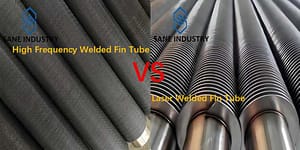
High Frequency Welded Fin Tubes vs Laser Welded Fin Tubes
High Frequency welded fin tubes and laser welded fin tubes are two dominant technologies in industrial heat exchange systems, each engineered for distinct operational demands.
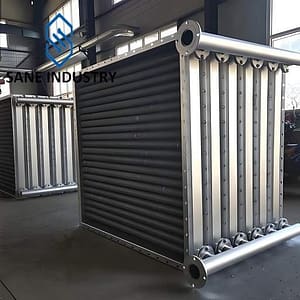
What is a Finned Tube Heat Exchanger?
Finned tube heat exchangers are specialized thermal transfer devices designed to enhance heat exchange between two fluids with significantly different heat transfer coefficients. These exchangers
How Does a Fin Tube Radiator Work 2025?
Fin tube radiators, as indispensable heat exchange equipment in modern industrial and civilian fields, play a crucial role in multiple industries including energy, chemical engineering,

What is a fin tube? A complete guide 2025
Fin tubes(Finned tubes), as indispensable high-efficiency heat exchange components in modern industry, significantly enhance heat transfer efficiency by increasing the heat transfer surface area, playing

What is the difference between a bare tube and a finned tube?
Bare tubes and finned tubes represent two fundamental categories of heat transfer components used across various industrial applications. While both serve the purpose of facilitating

What is a finned tube? The use and advantage of a finned tube?
A finned tube is a heat-transfer tube enhanced with metal fins to boost surface area and improve thermal efficiency. It’s widely used in heat exchangers,

What are the differences between seamless and welded Pipe?
Steel pipes are fundamental components in various industries, including oil and gas, construction, automotive, and manufacturing. The two primary types of steel pipes – seamless

How many types of finned tubes are there?
Finned tubes are essential components in heat exchangers, designed to enhance heat transfer efficiency by increasing the surface area available for thermal exchange. These tubes